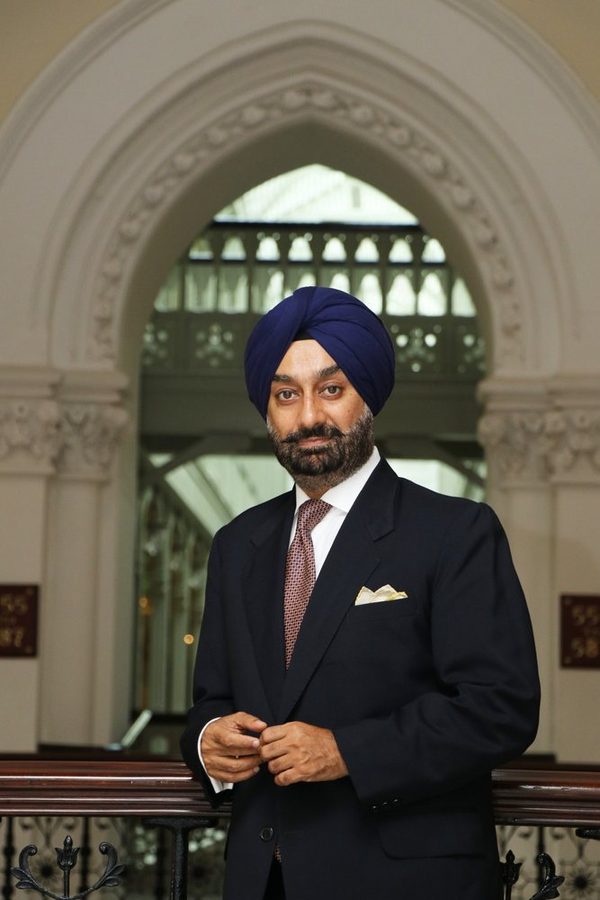
When I spoke with Taljinder Singh, he was general manager of The Taj Mahal Palace in Mumbai, the flagship of the Taj group. He has since become Senior Vice President and Brand Custodian at IHCL in Mumbai. In The Luxury of Attention he carries the clearest account of what knowing the guest meant before there were databases to hold the knowledge: as a young lobby manager in New Delhi, he was expected to know the history of the hotel’s top 250 guests from memory.
The path
Singh was born and raised in Shimla, a small town in the Himalayas, in a paramilitary household that trained him early in discipline, honesty and doing the right thing. He had no background in hotels when he joined The Taj Group’s two year management trainee program, and his plan to go abroad for a business degree never happened, in part because Taj kept investing in him and sponsoring courses in India and overseas.
His first job was assistant lobby manager at the Taj Mahal Hotel in New Delhi, then the company’s second most important property, where expectations ran high. His first manager told him, after he lost track of a VIP who had crossed the lobby, that he would need eyes in the back of his head. The resident manager, Patu Keswani, became his mentor, pushing him to take on projects beyond his duties, and together they wrote the first presentation on revenue management within the Taj group. The general manager, Ronnie Lobo, became the second mentor, and stayed one long after leaving the company.

What he is known for in the book
In the book, Singh’s early story is the canonical version of knowing your guest before the database era. There was no technology to track the guest experience. He was expected to hold 250 guest histories in his head and recall them on demand for any returning arrival, including what each guest had asked for before and which staff they had come to know. He watched Keswani walk the lobby, greet a returning guest by name, remember which suite they had taken last time and ask after a daughter who had been ill, and understood that he was now obliged to be capable of the same. The system worked because the senior person did the work of knowing. My argument in the chapter is that CRM databases have redistributed that work rather than removed it. The senior person still has to recognise the returning guest who matters most, and the staff still have to greet them by name without checking a screen.
“At the time, there was no technology in place to track the guest experience. I was expected to know the history of the top 250 guests of the hotel, verbatim.” Taljinder Singh, then general manager of The Taj Mahal Palace, Mumbai
In his own words
The earlier profile turns from guests to recruits, and the standard is the same.
“Artificial care is easily spotted and can do real damage to the guest experience. Instead, genuine care and concern is appreciated and understood far better than mere lip service.” Taljinder Singh, in A Wealth of Insight (2017)
What to take from him
Know your top guests without the screen. Pick the number that fits your property and make it a personal standard for the senior team, as Singh’s manager made it his.
Hire on values first. His questions at interview are whether a candidate is intrinsically hardworking, has integrity and graciousness, and has a natural willingness to help. Orientation then has to make an emotional connection with the brand, or service quality will show the gap.
Train everyone to listen for preferences. Likes and dislikes are gathered through real conversations by informed staff at every level, and his example of a concierge noticing a vintage car club logo on a guest’s shirt is the standard of perceptiveness he expects.
Answer public criticism in the brand’s own voice, quickly and with care, since in his view a brand is now guilty until it responds.
In the book
Taljinder Singh appears in Chapter 2, The Apprenticeship, where Keswani’s attention is the example of what a mentor actually spends on a protégé; in Chapter 3, Leading by Example, where Keswani’s lobby is where Singh absorbed the standard as a behavior rather than a policy; in Chapter 4, First the Team, where Lobo’s respect, fairness and dignity is one more iteration of a lesson that is learned by watching; and in Chapter 9, Knowing Your Guest, where the 250 guests held in a single memory is the canonical version of the discipline before the database era. Taljinder’s full profile, in his own words, runs 8 pages in A Wealth of Insight: The World’s Best Luxury Hoteliers (2017).
The full profile, in Taljinder Singh's own words
This is the complete profile of Taljinder Singh as published in A Wealth of Insight: The World's Best Luxury Hoteliers on Leadership, Management, and the Future of 5-Star Hospitality, reproduced word for word. Titles and positions are as they stood at the time of the interview.
Growing Up
I was born and raised in a small town in the Himalayan Mountains named Shimla, in the northern Indian state of Himachal Pradesh. Growing up, I loved to explore the outdoors and discover different forests, jungles, and streams. Coming from a paramilitary household, I was disciplined to focus on education, honesty, integrity, and doing the right thing.
Starting from Scratch
I first ventured into hospitality as a management trainee for The Taj Group. It was a two-year program, and I had absolutely no background in the industry before I enrolled. My original idea was to gain experience and then move abroad for a postgraduate business management degree, but that never happened. Given my ambitions, and while I continued working for the company after my training, Taj sponsored a series of courses at some of the best-known institutions of learning in India and around the world. Their commitment to my personal and professional growth taught me the importance of investing in your team.
When I started out as an assistant lobby manager at the Taj Mahal Hotel in New Delhi, there was no technology in place to track the guest experience. I was expected to know the history of the top 250 guests of the hotel, verbatim.
The Boss is Watching
My first job in the industry was as an assistant lobby manager at the iconic Taj Mahal Hotel in New Delhi. At the time, it was the second most important hotel of the company, right behind The Taj Mahal Palace in Bombay, which was their global flagship. The leadership team of the company regularly parked themselves at the New Delhi property when meeting with key business and government leaders, so expectations were extremely high. My first manager was a tough individual with a very demanding work ethic. When I made the mistake of not knowing where a particular VIP guest was after having crossed the lobby, the manager said I needed to “develop eyes in the back of my head” if I wanted to be a successful front office agent and ultimately a hotelier. In those days, there was no technology to easily track customers. I was expected to know the history of the top 250 guests of the hotel.
Early Mentors
When I first started working at The Taj Mahal Hotel in New Delhi, the resident manager at the time, Patu Keswani, became my mentor. He constantly pushed me to do more, to be better, challenging me to take on new projects and assignments over and above my duties. His analytical ability and understanding of how to maximize revenue had a great influence on me. I learned to pay close attention to numbers, and had awoken to the financial lens of the business—and just how important it was. Together, we wrote the first-ever presentation on revenue management in The Taj Group. Later on, he tasked me with making that same presentation to young graduating students of the management training program and other front office managers across The Taj Group to introduce them to the concept.
Ronnie Lobo, the general manager at the time, also became an incredibly important mentor to me and remained so for many years long after he left the company. One of the most important qualities I gleaned from his leadership and management style is how he treated people with the utmost respect, fairness, sincerity, and empathy.
Genuine Care
When we hire new recruits, the most important aspect we look for is whether they are the right fit from a values perspective. Are they intrinsically hardworking? Do they have a high degree of integrity and graciousness? Do they have a natural willingness to be of assistance to others? Once hired, on-boarding new employees is not simply about going through the motions of an orientation process. It is about getting them to connect emotionally with the brand and being immersed in the fabric and culture of the organization. If that connection is not made, there will be issues with the delivery of quality and service. Artificial care is easily spotted and can do real damage to the guest experience. Instead, genuine care and concern is appreciated and understood far better than mere lip service.
An Industry Challenge
The biggest challenge facing the industry today is high turnover, and finding people with the right attitude and disposition to care for others. If you are looking to join the world of luxury hospitality, the most important advice I can give is that you need to understand whether your own temperament is geared towards genuine care and assistance or not, and whether creating memorable experiences for others is something you aspire to do and something that brings you joy.
Print Vs. Digital
Today, digital marketing in all its forms is critical to reaching relevant consumers around the world. However, print certainly continues to play a role, particularly when guests are in-house and begin to touch and feel the properties in which they reside. Additionally, the sensory experience of flipping through a rich paper or magazine cannot be underestimated. The digital screen can only appeal to some of our senses, not all. The backlight of a tablet, too, often used to show menus at some restaurants, can be a major irritant to diners.
The Age of Social Media
Reputation management is becoming increasingly important, specifically in the context of social media and a variety of online review platforms. Real-time responses and engagement that demonstrate empathy, care, and concern can either make or break your brand. While some reviewers will pen unreasonable and even biased criticism of their particular stay or of the hotel more generally, handling such reviews with care and compassion can go a long way towards protecting your brand. The important thing when reacting to digital criticism of any kind is to stay true to the brand ethos in letter and spirit.
On Call, All the Time
One of the great aspects of real-time digital feedback is the democratic environment in which it’s received. Anyone that comes in contact with the brand can share their experience. This new environment gives every organization a kind of instant diagnosis of their service and reputation. Therefore, we have an immediate opportunity to course correct if necessary. At the same time, negative feedback or criticism is often believed to be true until it is disproven or reacted to. In other words, the brand in question is guilty until proven innocent. In the end, this new reality is both a gift and a curse, with the power to truly defame. As hoteliers, we are brand custodians, and we need to react in near real-time to be credible, putting us on call around the clock.
The New Concierge
In the age of information abundance, the luxury concierge must take on the mantle of cultural researcher, and have the innate ability to connect the dots with a guest on the basis of sheer perceptiveness. For example, a concierge should be able to recommend and deliver a private tour of a vintage car collection in the city by merely noticing a guest wearing a T-shirt with a vintage car club logo. Extreme perceptiveness and in-depth knowledge is in more demand than ever. In addition, extracting and documenting a guest’s preferences, likes, and dislikes can only be done through authentic conversations held by well-informed frontline associates and other staff at every level of the hotel. All staff must be trained to elicit such insight in a genuine, unobtrusive way to continually drive anticipatory service and experience.
Technology Can Help, and Hurt
Integrating technology into a guest experience can be a double-edged sword. Guests are quick to reject cumbersome operating logic of electronics and software. Simplified technology to enable entertainment options or business solutions will gain the respect of the traveler. The key is not to integrate technology for technology’s sake, particularly if it’s difficult to use. It must be simple and easy to operate, period.
A Hyper-local Experience
Today’s traveler is extremely well-informed about the traditions and cultures that they would like to experience. Delivering on those expectations in the most authentic way possible is critical to success. In dining, for example, using authentic ingredients and preparation methods. In health and wellness, authentic offerings tied to the ancient sciences of ayurveda, the 3000-year old traditional Indian practice of whole-body healing. Such offerings are not easy to create and deliver, but they are critical to the local experience. More broadly, culinary excellence in luxury hotels now includes an expectation of reviving lost cuisines and recipes of the locality—transporting guests to a unique and historical dining experience.
The profile is one of the first person accounts collected in A Wealth of Insight: The World's Best Luxury Hoteliers (2017), the book that preceded The Luxury of Attention.