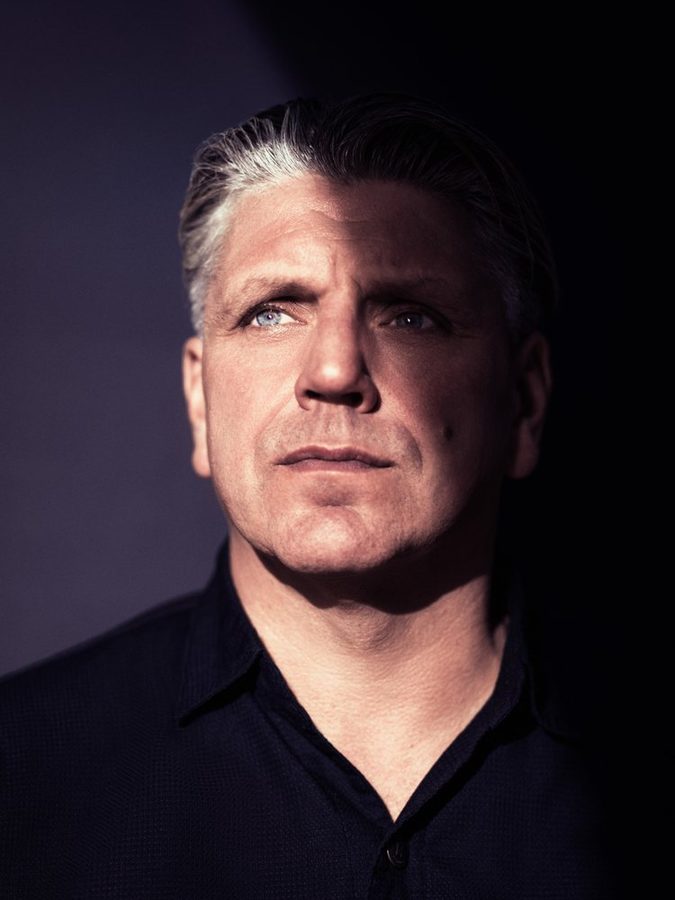
When I spoke with Jonnie Boer, he was chef and co-owner of De Librije in Zwolle, The Netherlands, a restaurant that has held three Michelin stars for more than two decades. He died in April 2025 at the age of sixty, and the book refers to him as the late Jonnie Boer. His words appear in The Luxury of Attention as he gave them. The idea he carries through the book is that a kitchen’s standard is set by the character of the people in it and by a leader who refuses to compromise on quality, whatever constraint he is working inside.
The path
Boer described his early years in a professional kitchen to me as heavy but exciting. The work asked a great deal in commitment and investment, and he was clear that it was, and remains, a wonderful profession. The context matters. When he started cooking in the 1980s, gastronomy in The Netherlands barely existed as a category. Serious European kitchens assumed French ingredients and French technique. A young Dutch cook who wanted to build a cuisine on the larder of his own province was setting out on a long road, and the comfortable choice would have been to cook French food well and leave it there. He did not take it. “I always followed my own path and passion, and I never compromised on quality,” he told me, and he called those the hallmark features of his career to this day. The book treats this as a disposition rather than a moment of revelation. He had been formed, before the kitchen, into the sort of person who would walk in and refuse to yield on quality, and the constraint he chose became the path. It produced De Librije, and a cuisine recognizable as distinctly Dutch in a way that would have been impossible without it.
What he is known for in the book
In the book Boer is most closely associated with how he evaluates people, and the practice is simple enough to copy. Every applicant to the team spends a few days on trial at the station. Experience counts for little in that trial. What he and the kitchen watch for is passion, perseverance and the right personality. He sits alongside Matthew Orlando, Marc von Arnim, Graham Ledger and Aaron Kaupp in Chapter 4 as one of the operators willing to pass over the technically superior candidate for the one with the stronger character, on the grounds that the first will cost the operation more in a year than the second will need in training over five. Three days at the station, he found, is a more honest read on character than any number of interview hours.
“We always have applicants to our team on trial for a few days. Experience is not that important. What we look for is people with passion, perseverance and the right personality.” Jonnie Boer, chef of De Librije, Zwolle
The same temperament runs through how he led once the hire was made. He believed people perform better when they are treated well, so he stayed calm, took everything step by step and kept a view of the whole. Yelling, he said, does not help any situation. The book reads that as a leader whose job is the overview and whose credit goes, almost entirely, to the team, an allocation Boer was comfortable with. It also follows his creative practice in Chapter 6: a little notebook carried everywhere, where first thoughts are scribbled as drawings, and sessions a few times each year in which the team brings all of the new ideas to life. Some turn into complete disasters. Others become something spectacular once one ingredient is added or taken away. The point the book draws from this is cadence. The session is an appointment on the calendar, protected from the daily firefighting, and creativity is a posture the whole operation adopts because the chef has made it the daily expectation.
In his own words
The profile in the earlier book is fuller on what happens when things go wrong. In 1993, the year De Librije earned its first Michelin star, it also received a bad review that Boer admitted was substantiated. In 2008, after opening the hotel, the business nearly went bankrupt, and he credited friends, family and the team with getting it back up.
“It’s about trying and working hard. We don’t believe in failure. While you may not succeed all the time, at least you gave it your all and learned along the way.” Jonnie Boer, in A Wealth of Insight (2019)
He was equally plain about what kept him steady. He and Thérèse were involved in every aspect of the restaurant and the hotel, and he gave that as the reason not much kept him up at night.
“When you’re involved in the details, both on the business side and the culinary side, you’re able to maintain a clear view.” Jonnie Boer, in A Wealth of Insight (2019)
What to take from him
Four practices come out of his pages. Put candidates on the station for a few days before you decide anything, and judge what they do there over what they say in a room. Stay calm on the floor, because the team performs to the temperature the leader sets. Carry the notebook, then put the review session on the calendar a few times a year and protect it from everything else. And when a fair criticism lands, take the bad week, absorb the lesson and go back to work with the resolve sharpened.
In the book
Jonnie Boer appears in Chapter 1, The Calling, for the disposition that formed him before the kitchen did; in Chapter 4, First the Team, for how he hires on character; in Chapter 5, Giving the Keys, for a calm leadership style that hands the credit to the team; in Chapter 6, The Creative Act, for the notebook, the team sessions and the constraint that shaped his cuisine; and in Chapter 7, In Pursuit of Perfection, for the year De Librije earned its first Michelin star and a substantiated bad review in the same season, and for how the kitchen absorbed it.
“It was a terrible feeling and we didn’t sleep properly for a week. But it only made us more determined. We believed in what we were doing back then.” Jonnie Boer, chef of De Librije, Zwolle
Jonnie’s full profile, in his own words, runs six pages in A Wealth of Insight: The World’s Best Chefs (2019).
The full profile, in Jonnie Boer's own words
This is the complete profile of Jonnie Boer as published in A Wealth of Insight: The World's Best Chefs on Creativity, Leadership, and Perfection, reproduced word for word. Titles and positions are as they stood at the time of the interview.
Early Days
I would characterize my early experiences in a professional kitchen as heavy but exciting. It was a real challenge in all aspects. It required a lot in terms of commitment and investment, but it was, and still is, a wonderful profession. Back in those days, gastronomy in The Netherlands nearly didn’t exist. It was all about French cuisine. I always followed my own path and passion, and I never compromised on quality, and those are hallmark features of my culinary career to this day.
The Power of Passion
We always have applicants to our team on trial for a few days. Experience is not that important. What we look for is people with passion, perseverance and the right personality. I believe that people perform better when they are treated well, so I always stay calm, take everything step by step and maintain a birds-eye view. Yelling does not help any situation. The most important feature of a healthy team is communication, but in the end, it all comes back to loving what you do and the passion you have for this profession and the craft.
We Don’t Believe in Failure
In 1993, the year we were awarded with our first Michelin star, we received a bad review. Back then the review was substantiated. It was a terrible feeling and we didn’t sleep properly for a week. But it only made us more determined. We believed in what we were doing back then. Today, we learn to deal with critical feedback and put it in perspective. In July of 2018 we celebrated our 25th anniversary. Those 25 years came with victories and setbacks, the most difficult of times being in 2008 after opening Librije’s luxury hotel. We nearly went bankrupt. Our friends, family and team never lost trust or confidence in us. Together we fought hard to get back up and we couldn’t have done it without them. It’s about trying and working hard. We don’t believe in failure. While you may not succeed all the time, at least you gave it your all and learned along the way. These experiences made us stronger, both personally and professionally.
A Clear View
Today, there isn’t much that keeps me up at night. Thérèse and I are involved in every single aspect of De Librije. We know exactly what goes on. When you’re involved in the details, both on the business side and the culinary side, you’re able to maintain a clear view. We have a firm grasp of our finances, quality of products, expectations of guests and of our team, and of new developments in the kitchen. We are in close contact with our guests, too, listening to their feedback, and we have maintained our mantra of never compromising on quality.
What Drives Us
Our goal is doing what we love. We don’t work in anticipation of awards or accolades of any kind. It is wonderful to be recognized for what we do, but that’s not what drives us. We focus on our guests, not the awards. We maintain the quality and consistency of our offering by staying curious and experimenting with different products, regions, cultures, flavors and textures. There is no magic bullet. You go through trial and error, over and over again, until your creation is perfect.
Creativity in All Forms
The most important feature of everything we do is creativity—not only in the kitchen, but in our whole operation. It’s not only about being creative in your dishes, but also in management and hospitality. We listen to our guests and translate their feedback into business goals, all the while maintaining the Librije signature and essence. It has to be authentic. The moment a guest arrives, they are immersed in the world of De Librije. They become part of the family to whom we share our passion and love. Both guests and staff feel that energy. Our creativity shows not only in our dishes, but also in exciting and different pairings—wine, tea, beer or some other new combination. More generally, as we are a luxury hotel too, we regularly renew the interior of the restaurant and hotel rooms to keep the ambiance fresh.
Mind to Plate
I think in terms of flavors and textures. In my head they all come together. Inspiration strikes at all times so I carry a little notebook with me where I scribble down the first thoughts in a drawing. Of course, it is then about creating, trial and error, and fine-tuning. A few times each year my team and I sit together to bring to life all of our new ideas. Some of them turn into complete disasters, but we always manage to discover new, exciting combinations. There is a lot you can learn during this process, but true creativity comes from within. We might create a dish that’s not so great, but by adding one ingredient, or by removing one ingredient, it can transform the result into something spectacular.
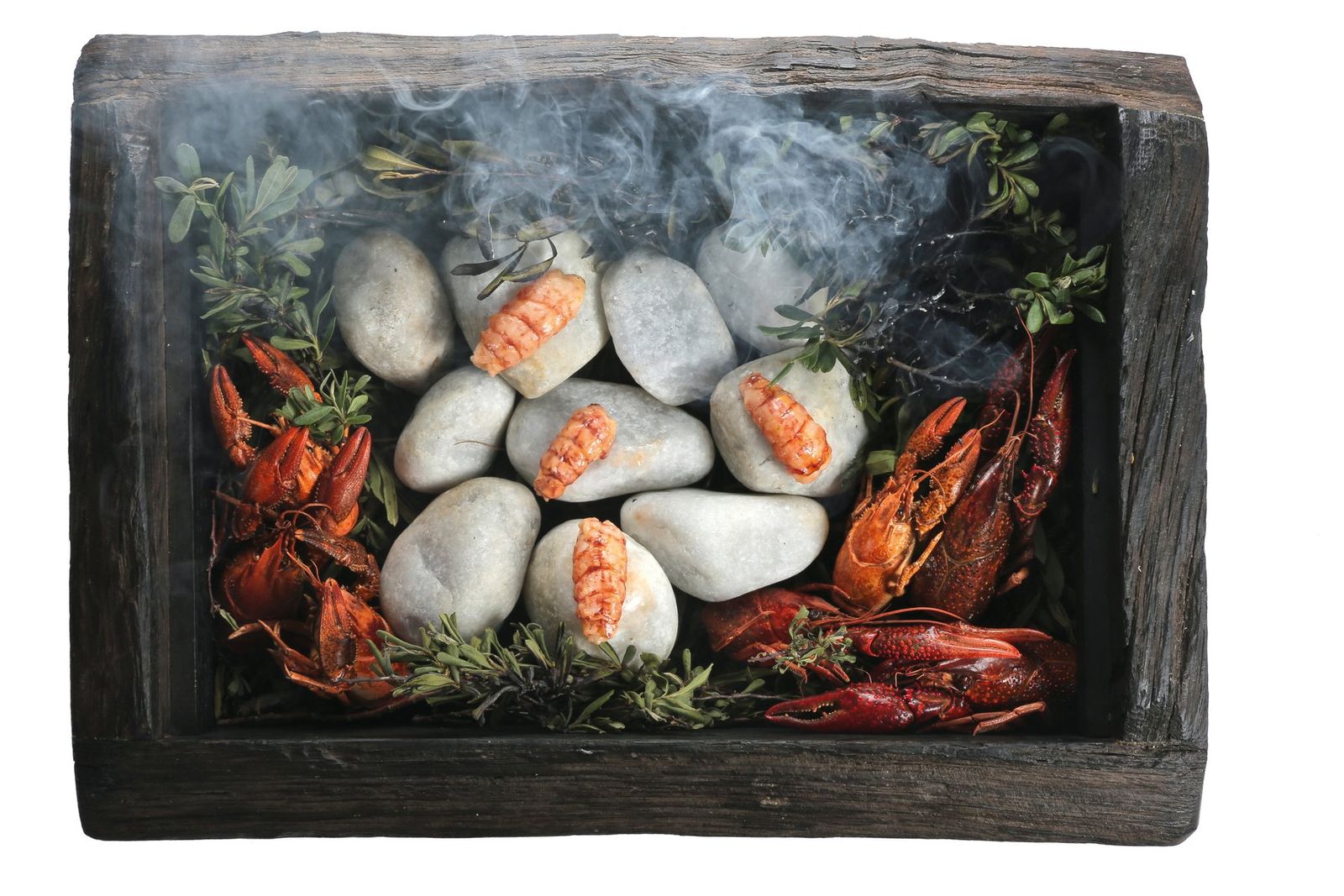
For example, one of the combinations we never thought would be so fantastic was blue cheese and chocolate with Old Harvest Ximénez Spínola from Spain. Another dish I believe in very much is our crayfish and deconstructed apple pie. The apple pie is my mother’s recipe, and when coupled with the crayfish, the flavors and textures are perfect.
The Perfect Moment
Creating the perfect dish is a struggle because perfection is intimately tied to a snapshot or a moment in time. You will want to create something new soon after and label that as perfect, too, so the notion of perfection is always changing and evolving. In other words, perfection is contextual. For me, perfection is not only creating the perfect dish. It is what happens when all aspects come together: food, wine, ambiance, service and a happy guest.
The profile is one of the first person accounts collected in A Wealth of Insight: The World's Best Chefs (2019), the book that preceded The Luxury of Attention.