
When I spoke with Graham Ledger, he was general manager of Singita, across South Africa, Zimbabwe and Tanzania, with four decades in wilderness luxury behind him and the company’s portfolio in those three countries built in large part under his hand. He is the operator in The Luxury of Attention who puts a number on hiring. Most of the people I interviewed describe what they look for in a candidate. Ledger describes how he weighs it, and that weighting is the idea he carries through the book.
The path
Ledger grew up in Eastbourne, on the south coast of England, in a close family. His father worked for a company that ran cinemas across southern England, and his mother, once the children were raised, became a housekeeper at the Grand Hotel in Eastbourne. His own first job in hospitality was serving desserts from the trolley at Sunday lunch in a local restaurant, for pocket money. What he noticed was the pace. No two hours were the same, and that variety is what pulled him toward the trade.
He moved quickly. His first management post was as one of two assistant managers at the Apollo Hotel in Birmingham, running the function room on weekends for weddings, where he learned that if the logistics behind the scenes are not handled, the front of the house cannot operate. At twenty he became the youngest deputy manager ever appointed at the De Vere group’s De Montfort Hotel in Kenilworth. In South Africa he went into partnership with an entrepreneur ten years his senior, a chartered accountant by training, and the two of them grew a single hotel into a group of eight properties over fourteen years before selling the company to an investment firm listed on the Johannesburg Stock Exchange. He credits that partner with teaching him about life and family as much as about business. The wilderness lodges came after, and by the time of our interview he had spent most of his career in them.
What he is known for in the book
Ledger’s contribution to Chapter 4 is a framework with a name. After interviews, and after a careful background and reference check, he evaluates a candidate using what he calls the 80/20 rule. Eighty percent of the judgment rests on enthusiasm and cultural fit. Twenty percent rests on technical skill, which can be taught and developed over time. The eighty is the door. If a candidate cannot pass through it, the twenty does not matter, because the technically superior hire who lacks character will cost the operation more in the first year than the character hire will cost in training over five. Ledger, like von Arnim, Kaupp, Orlando and Boer, has lived that arithmetic and will not hire against it.
He is also specific about how he tests for the eighty, and this is the part of his account that other managers borrow most readily.
“When interviewing candidates, I ask them about family values, their school years, achievements and friendships. I ask whether they’re still in touch with old friends as I believe this shows a commitment to valuing relationships.” Graham Ledger, then general manager of Singita
The questions sound personal until you see what they measure. A candidate who has kept friendships alive over a decade has shown the disposition to maintain a relationship under the pressure of time, and that is the disposition a lodge asks of its people every day with returning guests. A person who cannot hold a friendship is unlikely to hold a guest.
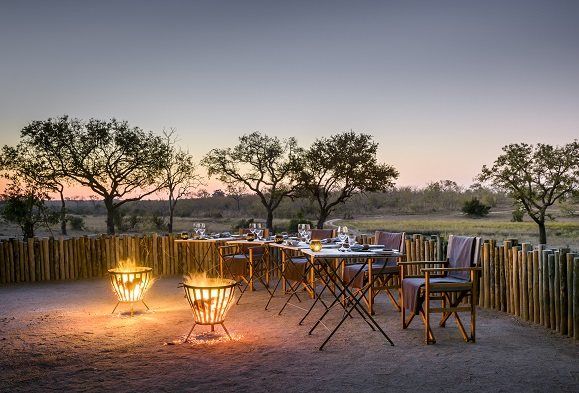
Once the hire is made, Ledger extends the same seriousness to the first weeks. A deep orientation is paramount, he says, and a poorly inducted staff member will fail spectacularly, through no fault of their own. At Singita the introduction runs from three days to more than three weeks, at properties where seasonal pressure might tempt a less rigorous operator to compress onboarding to the minimum. New staff are also tutored in local sensitivities and traditions, from a short guide on how to integrate well that senior local staff and executives wrote together. In Chapter 8 he gives a quieter example of the same attention turned toward guests. If a guest regularly orders a gin and tonic, the cocktail goes into their drink box for the guide to share on a game drive, or a surprise gin bar appears at the bush dinner. The preference is ordinary. The use of it belongs to the place.
In his own words
Two lines from his earlier profile are worth carrying. The first is on what a working culture needs in order to hold together.
“A truly successful working environment needs a variety of elements and attitudes: pursuit of excellence while being humble; being proactive without being aggressive; being consultative without being condescending; and being decisive without being arrogant.” Graham Ledger, in A Wealth of Insight (2017)
The second is on what happens when training goes stale.
“We need to constantly refresh our training, expectations, and ways we motivate staff; otherwise, an assembly line mentality will prevail, resulting in a fatal blow. Each and every guest must feel like an individual, rather than being processed on an assembly line.” Graham Ledger, in A Wealth of Insight (2017)
What to take from him
Weigh character before skill, and say the weighting out loud. A hiring panel that has agreed on eighty and twenty in advance argues less about the polished candidate with the thin references, because it has already decided what the polish is worth.
Ask about old friendships. The question costs nothing, it is hard to rehearse an answer to, and it tells you whether a person keeps relationships going when nobody is making them.
Treat orientation as the new hire’s protection. Ledger’s three weeks are expensive at a seasonal lodge, and he pays for them because the alternative is a person set up to fail in front of guests. Shortening the induction saves money in the week it happens and spends it for a year afterward.
Use what you know about a guest in a form that fits your property. The gin and tonic in the drink box works because a game drive is where Singita’s guests spend their afternoons. A city hotel has to find its own equivalent rather than copy the gesture.
In the book
In the book, Graham Ledger appears in Chapter 4, First the Team, on the 80/20 rule and on orientation that runs to three weeks, and in Chapter 8, The Human Touch, on the gin and tonic in the drink box. Graham’s full profile, in his own words, runs 12 pages in A Wealth of Insight: The World’s Best Luxury Hoteliers (2017).
Where Graham is now
Graham Ledger was last listed as Managing Director, Singita Grumeti Reserves (Tanzania). (source)
Career
- Managing Director, Singita Serengeti (source)
Checked 13 November 2026. Corrections are welcome at press@theluxuryofattention.com.
The full profile, in Graham Ledger's own words
This is the complete profile of Graham Ledger as published in A Wealth of Insight: The World's Best Luxury Hoteliers on Leadership, Management, and the Future of 5-Star Hospitality, reproduced word for word. Titles and positions are as they stood at the time of the interview.
Growing Up
I grew up in a tightknit family in Eastbourne, UK. As a kid, I enjoyed fishing, playing cricket, riding bikes, and exploring huge open farmlands. My father worked for a company that ran a chain of cinemas throughout Southern England, and my mother, after she raised my siblings and I, became a housekeeper for the De Vere Hotel Group at the Grand Hotel in Eastbourne. My first experience in the hospitality industry was serving desserts off the trolley at lunchtime on Sunday at a restaurant called Crimples. This provided some extra pocket money, and I discovered that I really enjoyed the interaction with guests and the feeling of such a dynamic environment. No two hours were the same. This variety was a real motivating factor for me to pursue hospitality.
Making History
I rapidly progressed to various leadership positions at a very young age, working for a variety of hotels in the UK. My first leadership position was serving as one of two assistant managers of the Apollo Hotel in Birmingham, UK. My primary responsibility was to handle the function room on weekends for weddings. This role taught me the vital importance of planning the logistics for an event, because if those back-ofhouse tasks are not efficiently managed, the front-ofhouse cannot function. I also learned the importance of seemingly disparate roles, all of which are essential for success. Soon after, at the age of twenty, I became the youngest ever appointed deputy manager of the De Vere Hotel Group’s De Montfort Hotel in Kenilworth Midlands, UK.
A Recipe for Success
A truly successful working environment needs a variety of elements and attitudes: pursuit of excellence while being humble; being proactive without being aggressive; being consultative without being condescending; and being decisive without being arrogant. Overlaying this formula onto a properly rewarded workforce, with deliverables that are measurable at all levels, is the recipe for success.
A Well-educated Team
In the luxury hospitality sector, and in particular the game lodge and wilderness segment, it is vital that our staff have a deep knowledge of the area and its offerings. Guests are very likely to be immersed into a very foreign environment and need to be reassured that they are in good hands, and that they are being professionally cared for at every level.
Best Laid Plans
When articulating a broader strategy or specific guidance, be clear and articulate in your communications. It may make sense in your own head, but a lack of specificity can lead to misinterpretation. When policies and practices are open to interpretation or imagination, the best laid plans can run amok.
Diverse Interactions
In remote locations, particularly where we operate, employees must be able to mix and gel with any and all cultures that exist on our payroll. At any one time we can have up to a dozen different cultures and nationalities on staff. If even one person rubs another the wrong way, it can be very disruptive and have obvious negative consequences. Hire for acceptance and embrace of diversity, and a high level of cultural sensitivity and appreciation.
The 80/20 Rule
After interviews, including a careful background and reference check of a potential employee, evaluate their candidacy using the 80/20 rule. The 80 refers to enthusiasm and cultural fit, while the 20 refers to the technical side, which can be taught and developed over time. The 80 portion is the key factor in building a powerful team that works well together and commits to excellence, particularly in times of stress.
A Premium on Values and Relationships
When interviewing candidates, I ask them about family values, their school years, achievements, and friendships. I ask whether they’re still in touch with old friends, as I believe this shows a commitment to valuing relationships. Depending on the position, I will also ask a candidate to complete a “suitability” questionnaire—a third-party psychological and analytical test to gauge whether the candidate would be compatible with us and our values.
An Invaluable Mentor
In South Africa, I partnered with a successful businessman and seasoned entrepreneur ten years my senior to launch a hotel of our own. A chartered accountant by training, he taught me a great deal about life, tolerance, family, and success. We grew our hotel business into a group of eight properties over fourteen years, eventually selling the company to an investment firm that was listed on the Johannesburg Stock Exchange. This is something I could have never have achieved without his guidance, vision, and expertise.
Orientation
When a new employee joins the team, a deep orientation is paramount. A poorly-inducted staff member will fail spectacularly, and it is completely unfair to them to not be properly immersed in the company, its practices, and its values. This process of introduction ranges from three days to more than three weeks. We also have new staff tutored in local sensitivities and traditions. A small committee of senior local staff and executives has developed a simple but effective “how to integrate well” guide, which is vital to maintaining a level of respect within local communities.
The Robot Syndrome
We need to constantly refresh our training, expectations, and ways we motivate staff; otherwise, an assembly line mentality will prevail, resulting in a fatal blow. Each and every guest must feel like an individual, rather than being processed on an assembly line. This challenge can be overcome with the right guidance and education. Given that the talent pool in remote locations is relatively shallow, we developed a very robust in-house training program, which includes rigorous identification of potential employees from all sectors of economic life in and around our communities. We seek enthusiasm, the ability to speak rudimentary English, and an effort to present a professional appearance. The rest we can shape by absorbing these candidates into our way of doing things and by infusing them with our company DNA so that they can grow organically.
Be Prepared to Sacrifice
If you’re interested in joining the luxury hospitality business, be absolutely certain that this is the career for you. There are some significant sacrifices to make throughout your journey. It is more of a lifestyle than a career. The unrelenting commitment involves being on and available 24/7. Importantly, when all others around you are celebrating, you are the one working to ensure that celebration is a success, and that can be hard to handle in the beginning. For example, working during Christmas and being away from loved ones.
A Personal Touch
Taking special note of a guest’s preferences before and during their stay is one of the hallmarks of this industry. If a guest regularly orders a gin and tonic, we will add this cocktail to their drink box for their guide to share with them during a game drive, or we may prepare a surprise gin bar during sundown in a beautiful setting. We also surprise guests by arriving to an expected location for breakfast, lunch, or dinner, as we often setup such experiences in breath-taking areas. Knowing this is a guest’s first time at our property or that they’re celebrating something special also allows us the opportunity to respond creatively.
The Evolving Traveler
Guests today see travel as a way to bring more balance to their lives. They view a vacation as a way to reflect and make better life choices. They are not simply looking to sustain their own health but also looking to immerse themselves in new cultures and create meaningful memories, including leaving the location a little better than they found it. Nature also has a powerful impact on our stress levels. The more we separate ourselves from it, the more anxious and stressed we become. With space becoming a luxury in big, cosmopolitan cities, it is no wonder that Sub Saharan Africa has had the fastest growth in wellness tourism since 2007. Guests are coming to Africa in search of wellness and to reconnect with nature.
A Visible Trend
Sustainability is emerging as one of the most important trends in our industry. After the financial crisis of 2008, we saw a change in the mindset of our guests, who started to exhibit a greater desire for personal connections and enriching experiences with a lighter footprint. Now there’s evidence, too, to support this observation. Guests are increasingly likely to choose a destination based on its social or environmental impact, and they prefer companies that embed eco-friendly practices into their operations. Just as guests expect free Wi-Fi, they now also expect hotels and other tourism businesses to behave in a socially responsible way.
In the coming years, I predict guests will expect their destinations to act responsibly, ethically, and sustainably, without sacrificing luxury. But the definition of luxury will continue to evolve; it will become more about the experience than the accommodation. The new luxury will be clean air, open spaces, and simplicity in design.
The Future of Food
Good food has not only become a luxury. It has become a necessity. With health, nutrition, and the environmental footprint you leave behind at the top of many travelers’ list, documenting food preferences and accommodating these needs is very important. Eating natural and being conscious of what you put into your body is a fast-growing and important trend to follow, as is promoting sustainable diets and food practices in your establishment. Culinary experiences can now determine whether or not a trip was successful, so making sure your establishment’s food is up to scratch with international trends is non-negotiable.
The profile is one of the first person accounts collected in A Wealth of Insight: The World's Best Luxury Hoteliers (2017), the book that preceded The Luxury of Attention.