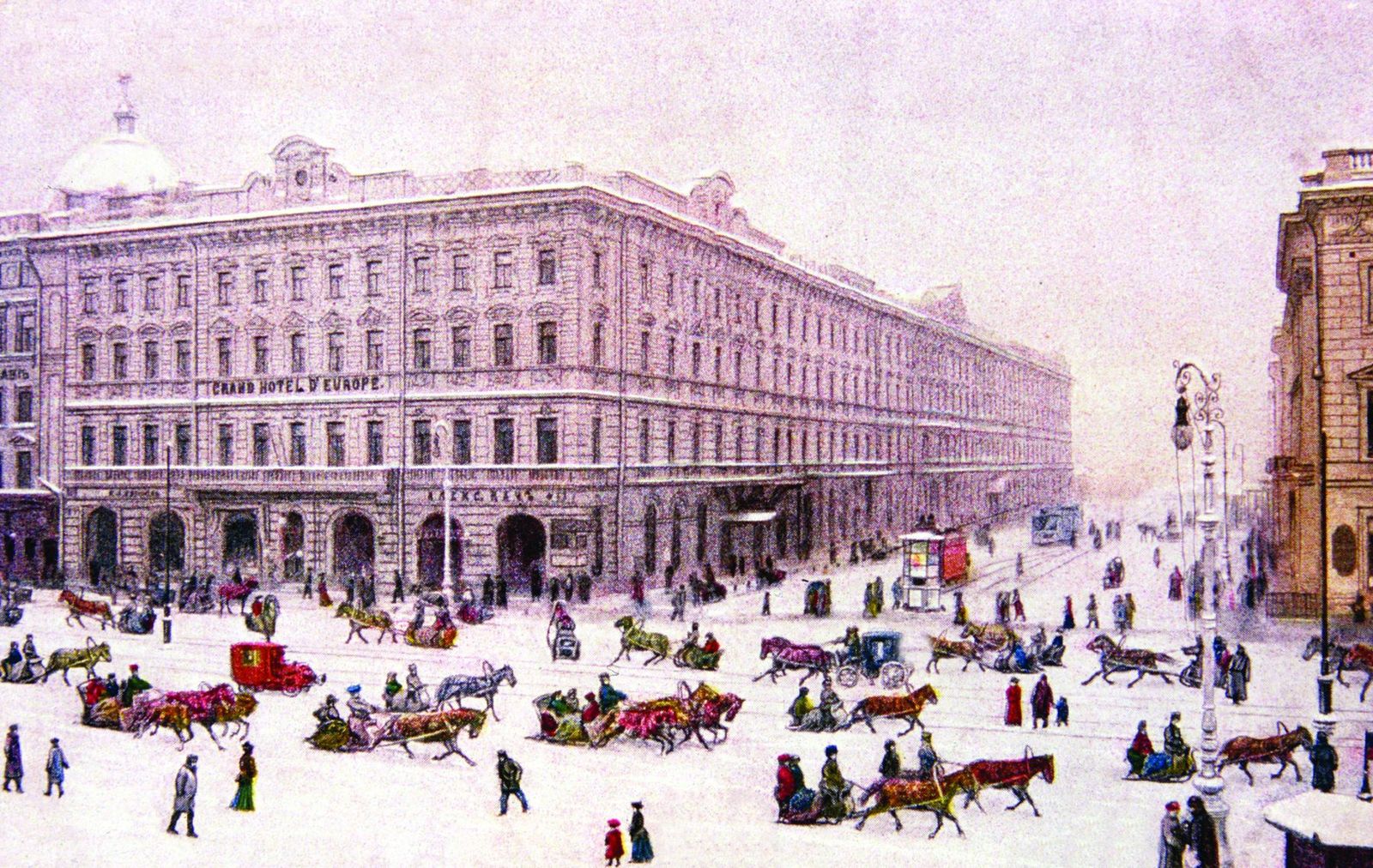
When I spoke with Sjefke Jansen, he was general manager of Belmond Grand Hotel Europe in St. Petersburg, a property that opened in 1875 and one of the most storied hotels in Eastern Europe. He has since become General Manager of Amankila in Indonesia. The idea he carries in The Luxury of Attention is that a heritage property sells its substance, and that the marketing is only the visible form of what the property already is.
The path
Jansen grew up in Heidelberg, Germany, the son of parents in the fashion business, and attended an anthroposophy school that he says still inspires him. His father died when he was ten, and his mother raised him and his brother on her own. He learned early never to take anything for granted. From her he also took what he now calls his daily guide, an instinct for reading people and their emotional meaning, which he watched her apply to her staff and to her own family. He had wanted to be a lawyer, admitted he did not want to study hard enough for it, and accepted the first offer that came along, a chef training program in Germany. The kitchen was the opposite of the wild child who walked into it. “I learned the importance of precision and discipline,” he told me. His first leadership post, as restaurant manager at the Cellars-Hohenort Hotel in Cape Town, South Africa, taught him that the German approach only works in Germany, and that he would have to become flexible and open to doing things in new ways. He had no mentors. He studied managers instead, and the ones who ran their departments on authority and fear taught him exactly how he would not lead.
What he is known for in the book
In Chapter 11 Jansen speaks to the question of what a heritage hotel is actually selling. His answer is that it is no longer a commodity. The rooms and the service at the Grand Hotel Europe are, in his telling, as good as those of any competitor in the market, and that is exactly why they are not the point. What the property sells is its history, the accumulated specificity of place, of guest memory, of the city around it, of the people who have passed through it across a century and a half. He was clear with me that this is the operating substance of the hotel. The marketing describes it. The chapter sets his account beside those of Gerrit Graef and Ricardo Costa, and alongside Eneko Atxa’s Basque kitchen, as operators who protect what a brand is rather than working its surface, and it returns to the years he spent guarding the property’s Russian character against the temptation to internationalize.
“Selling a commodity is not difficult, offering something authentic is. The Belmond Grand Hotel Europe is as good as any competitor in the market, but what we’re really selling is history.” Sjefke Jansen, then general manager of Belmond Grand Hotel Europe, St. Petersburg
In his own words
The earlier profile shows the leader behind the hotel. He walks the property every day and speaks to whomever he meets, and he says a colleague met in a corridor will tell you things no meeting surfaces. He holds quarterly gatherings for the whole staff, sends email only as a last resort, and sends people to sister properties to see other operations.
“Respect and trust, both earned and not demanded, are the key to creating a culture of success.” Sjefke Jansen, in A Wealth of Insight (2017)
What to take from him
Know what your property is before you decide what to say about it, and protect that substance ahead of the campaign. Walk the floor daily and listen in the corridor, where people speak more freely than in an office. Build a place where ideas come up from any level without fear, since the managers who run on fear are, in his experience, the insecure ones. And when you forecast, be precise about the channels that will shift and modest about the work itself.
In the book
Sjefke Jansen appears in Chapter 11, Staying True, where his account sits alongside those of other operators who protect the substance of a brand rather than working its surface, and in Chapter 14, The Future of Luxury and Craft, where he appears among the forecasters, having predicted to me a fully virtual vacation that has not arrived and may never. In both places he was exact about the channels that would change and never once suggested the substance of the work would.
“Facts and figures are becoming less relevant. Now it’s purely about the experience.” Sjefke Jansen, then general manager of Belmond Grand Hotel Europe, St. Petersburg
Sjefke’s full profile, in his own words, runs ten pages in A Wealth of Insight: The World’s Best Luxury Hoteliers (2017).
The full profile, in Sjefke Jansen's own words
This is the complete profile of Sjefke Jansen as published in A Wealth of Insight: The World's Best Luxury Hoteliers on Leadership, Management, and the Future of 5-Star Hospitality, reproduced word for word. Titles and positions are as they stood at the time of the interview.
Growing Up
I grew up in Heidelberg, Germany, to parents who were in the fashion business. I attended an anthroposophy school, which had a significant impact on my life and continues to inspire me. When I was ten, my father died tragically, so my mother took care of my brother and I for many years before I left home. From a very early age, I learned never to take anything for granted, for life can change in a split second. It was a tough childhood, but I enjoyed the outdoors as much as I could—rugby, cycling, swimming, and running.
My mother has a very sophisticated natural instinct, empathizing with others and understanding emotional meaning. I learned a great deal from her about how she treated her staff and us as a family. Today, EQ serves as my daily guide both personally and professionally. It is one of the pillars for successful teamwork. There is an inner ambition, not driven by title or money, which is highly motivating for yourself and others. And that’s something we all share.
Not for the Faint of Heart
I always wanted to become a lawyer, but that was a pipe dream. I didn’t really want to study hard, read a lot of books, or analyze cases. My mother knew this, so she encouraged me to pursue a culinary career instead of just hanging around. The first offer that came up was a three-year chef training program in Germany. I accepted. I was a bit of a wild child who knew no borders. Working in a kitchen as a trainee was the opposite. It was hyper-structured and hierarchical, but I learned the importance of precision and discipline. At the same time, I learned that working in a kitchen is not for the faint of heart.
A Broader Horizon
My first leadership position in hospitality was as a restaurant manager at the Cellars-Hohenort Hotel in Cape Town, South Africa. This experience taught me a great deal about how diverse our industry could be. All of a sudden I was exposed to people and ideas from different backgrounds and cultures. It was inspiring, as it taught me to be open-minded. I also came to realize very quickly that the German approach does, in fact, only work in Germany. I needed to learn to be flexible, adaptable, and open to doing things in new ways.
The Key
Respect and trust, both earned and not demanded, are the key to creating a culture of success. Don’t just hear what your team has to say; show genuine care and listen carefully to their ideas and feedback, including them in decisions. Equally important is to create an environment free of fear that allows for an unlimited exchange of ideas from any level of staff.
Common Sense
Hospitality can be very simple if we understand and appreciate the basics—serving others to make them genuinely happy. Applied in practice, interactions between staff and guests should be one of common sense.
Three Fundamental Values
One of the most important lessons I’ve learned is that passion, attitude, and integrity form the backbone of good leadership. No matter what level of job, having a passion for service and an optimistic attitude will inevitably lead to positive results. Additionally, always being honest, fair, and ethical will garner the respect and trust of your colleagues.
Street Smart
Over the years, I studied people and their behavior in a variety of circumstances and situations, from the subtle to the extreme. By keenly observing people, and having not had any mentors, I came to think of myself as being street smart. Often times you learn what not to do from managers, rather than how best to act. That kind of insight is equally valuable. I have worked for many supervisors who managed their departments purely through superiority and authority, and less through respect, trust, and knowledge. They all had two things in common—they were insecure and driven by fear. It was always a façade that crumbled eventually. I promised myself I would never lead in such a way if given the opportunity.
Communicate to Motivate
One of the most important aspects to motivating your team and keeping them engaged is open, genuine, informal and formal communication. First and foremost, you need to be visible and approachable. Walk the property every day and speak to whomever you meet on the floor. You will be amazed by what your colleagues tell you if you speak to them in an informal environment such as the corridor, lobby, or restaurant. In addition, we hold quarterly all-staff gatherings and regular one-on-one meetings with department heads to ensure constant dialogue. As a last resort, I send emails to the team. Nothing beats the personal approach.
Learn to Progress
I urge everyone on the team to educate themselves while working to further their career. Whether in person or online training, I urge them to take every opportunity they can to develop professionally. To encourage that ethos, we conduct language classes, on-the-job training, job-related classes, and cross-exposure programs where we send staff to sister properties for a period of time to be exposed to different operations.
Impatient Millennials
One of the biggest challenges to leading a luxury property today is tied to the current and growing culture of instant gratification. The younger generation of employees are incredibly impatient. They want to be recognized immediately, failing to understand that it takes many years to become successful in this industry. This presents a challenge in recruiting and retaining young employees who are eager to climb the ladder, but not eager to put in the work and time required to progress.
Our History is Unmatched
An authentic, local experience is becoming more crucial than ever. Selling a commodity is not difficult—offering something authentic is. The Belmond Grand Hotel Europe is as good as any competitor in the market, but what we’re really selling is history. Our property is 141 years old and has always been a hotel. We opened the first fine-dining restaurant in Russia. We had the first restaurant with electric light in Russia. Over the years, we’ve had every politician, statesman, artist, and celebrity stay with us. Elton John once performed an impromptu concert in the hotel over dinner. Dostoevsky wrote books in our hotel. Tchaikovsky composed music in his room and Pavarotti sang from the balcony to an audience standing on the street.
Exclusive Experiences
Built over many years, our relationships throughout the community are some of the strongest in the city. For example, we have our own private box, five meters from the stage in Mikhailkovsky Theater. There are only four seats available, all of which are reserved for guests. We can also arrange special access to The Hermitage Museum afterhours, when it is closed to the public, or organize a visit to the restoration rooms of the Russian Museum, where guests can see how antiques are being restored. Coupled with unique partnerships with Dom Perignon and Hennessy, we’re able to offer some of the most exclusive experiences in the world.
Virtual Reality
This industry is no longer about selling commodities. Today, it’s about connecting emotionally with the audience by telling an authentic story. Facts and figures are becoming less relevant. Now it’s purely about the experience. In this new context, I believe print media will have little to no future given its limited ability to form the type of emotional connection that can be created through digital means. I believe that virtual reality is the future of luxury hospitality. You will be able to create and experience an entire journey without ever leaving your living room. The ride from the airport to the hotel, a welcome message from the general manager, a tour of the lobby, room, kitchen, and more. The virtual vacation is where we’re headed.
The Social Media Challenge
We are bombarded with images and information 24/7, and filtering what is truly relevant is becoming increasingly difficult. In most cases, you may read a headline and glance at some incredible photos. But the reality is that snippet of attention is insufficient to create a lasting positive reputation of your brand. Moreover, Twitter, Facebook, Snapchat, and Instagram have massive, diverse audiences, and it is very hard to measure which audience specifically is your target market. In other words, it’s great exposure, but is there a measurable or tangible return on that effort? I’m not certain.
The profile is one of the first person accounts collected in A Wealth of Insight: The World's Best Luxury Hoteliers (2017), the book that preceded The Luxury of Attention.