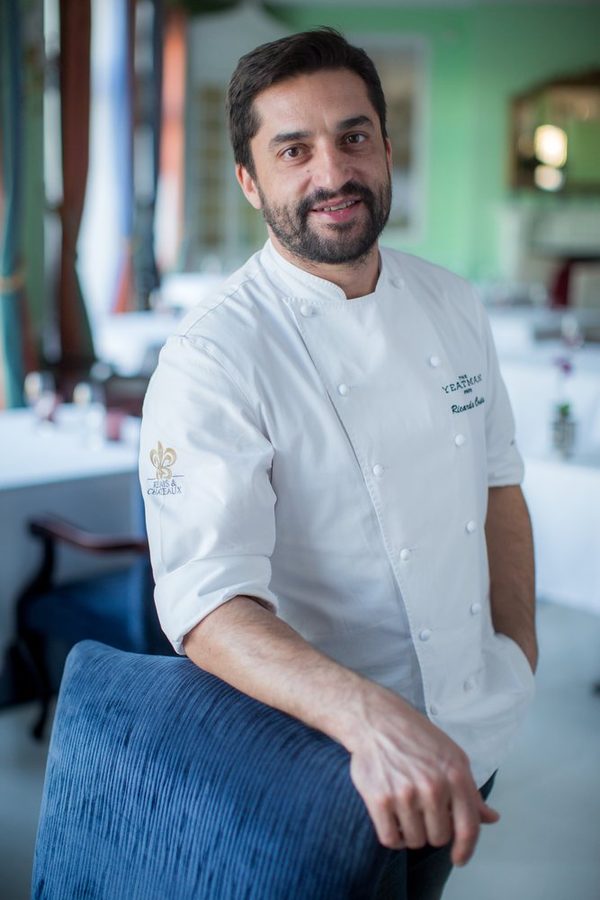
When I spoke with Ricardo Costa, he was chef at The Yeatman in Porto, Portugal, a kitchen with two Michelin stars given over almost entirely to Portuguese cooking. He appears in one chapter of The Luxury of Attention, and he is there because of a decision. He could have built a kitchen for the international circuit. He built one for Portugal instead, and the book uses him to show what that choice costs and what it earns.
The path
Costa is from Aveiro, on the Portuguese coast. As a boy he spent summer holidays working at a restaurant called Cozinha do Rei, the King’s Kitchen, washing up and helping with basic tasks. When he decided to cook for a living he enrolled at the Hotel School of Coimbra, trained in its kitchens, and found the work growing on him as the responsibility grew. He describes the progression as curiosity first and passion after, with each new environment pushing him to take the craft more seriously.
What stayed with him from childhood was taste. His grandmother’s cooking, and the flavors of cod and coffee in particular, bring back meals with his grandparents, and both ingredients are on his menus now, though never in the same dish. That memory is the root of the kitchen he later built. The lessons he could confirm with professional training were the ones his grandmother had taught him first.
What he is known for in the book
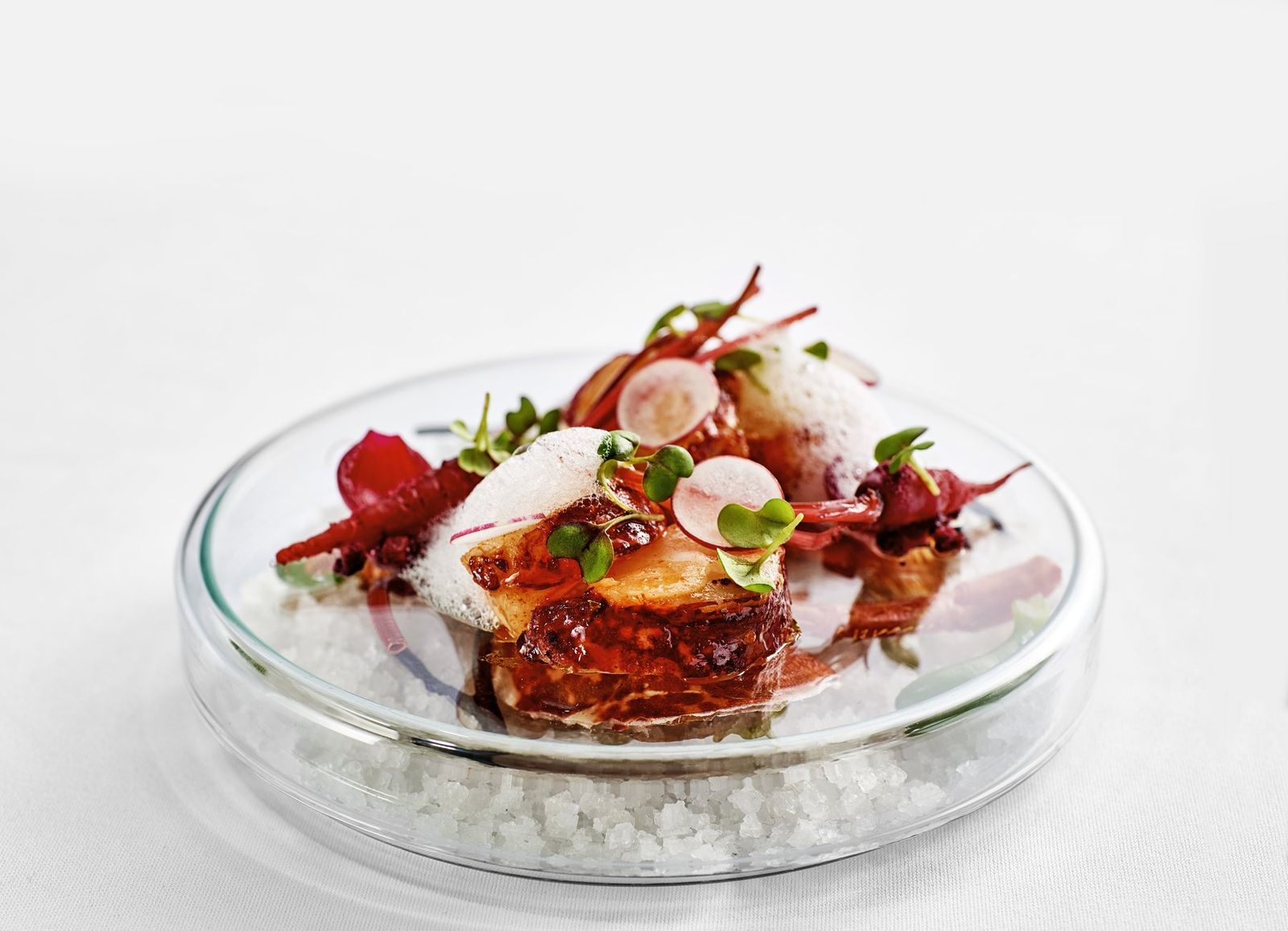
In Chapter 11, Staying True, Costa gives the kitchen’s version of a principle the chapter also draws from hoteliers. The dishes at The Yeatman exist to transmit the quality and authenticity of Portuguese gastronomy, its fish, seafood and vegetables, while respecting the seasons and the places those ingredients come from. He goes further than most chefs into the operator’s responsibility to a traveler.
“When a person travels to another country, they want to understand the culture and traditions of that country and that’s what I aim to deliver.” Ricardo Costa, chef of The Yeatman, Porto
A chef working from that position has declined a different career. He could have built a kitchen tuned to fashion, French in technique, sourced from anywhere, plated for the camera. Costa chose Portugal, and the choice is the brand. The chapter is frank that staying true costs. For Costa it meant passing up whatever faster recognition a more fashionable kitchen might have produced.
He also gave me the most useful account in the book of how a kitchen stays true without standing still. Unless the recipe is perfect, he believes certain dishes need to evolve because the world has evolved. People are different, food habits have changed, and the concerns people bring to the table are different from those of the past. The evolution of a dish happens naturally, through a change of ingredient, of preparation or of presentation. A kitchen that protects what is great about a recipe while letting the dish move with the world is doing both halves of the discipline at once.
In his own words
From his earlier profile, on what he asks of his brigade.
“To do this, there are five core values that I transmit to my team, and which I consider to be fundamental to the healthy running of a kitchen: respect (mutual and of rules), loyalty, solidarity, precision and discipline.” Ricardo Costa, in A Wealth of Insight (2019)
The objective those values serve is stated just as plainly: to match or surpass the guest’s expectations, every service.
What to take from him
Decide what your kitchen is for, and let the decision narrow your options. Costa’s identity is a constraint he chose, and the constraint is what the market eventually learned to recognize.
Separate the recipe from the dish. The recipe is the thing you protect. The dish is allowed to change as ingredients, habits and concerns change, and a chef who refuses either half will lose something.
Name the values out loud and keep the list short. Five words that every cook can repeat do more work than a manual nobody reads.
Budget for failure. Costa calls the perfect dish a daily goal, and he says reaching it requires failing along the way, which means the creative process has to have room for attempts that do not work.
In the book
In the book, Ricardo Costa appears in Chapter 11, Staying True, where his kitchen stands alongside the accounts of Rodolfo Guzmán and Eneko Atxa as an example of a brand built from substance rather than from marketing, and where his thinking on the natural evolution of a dish closes the chapter’s argument about protecting what is great while letting it change. Ricardo’s full profile, in his own words, runs 6 pages in A Wealth of Insight: The World’s Best Chefs (2019).
Where Ricardo is now
Ricardo Costa is Executive Chef of The Yeatman, Vila Nova de Gaia, Portugal, a post held since 2010. (source)
The restaurant holds a score of 94.5 in La Liste 2026.
Career
- Executive Chef, Restaurant Largo do Paço, Casa da Calçada Hotel, Amarante 2007 (source)
- Head Chef, Restaurant Portal, London 2007 (source)
- Sous Chef, Sheraton Porto Hotel & Spa, Porto (source)
- Chef, El Girasol (source)
Training
- Formal education at the Escola de Hotelaria e Turismo de Coimbra (School of Hotel and Tourism in Coimbra) (source)
Recognition
- Michelin star for the Restaurant Largo do Paço, Casa da Calçada Hotel, Amarante (as Executive Chef there; MICHELIN Guide listing 2009-2010) (2009) (source)
- Michelin star for The Yeatman's restaurant under his direction (2011) (source)
- Second Michelin star for The Yeatman's Gastronomic Restaurant (2017) (source)
- Chef of the Year, awarded by the Portuguese magazine Wine (2009) (source)
- Chef of the Future, International Academy of Gastronomy (2012) (source)
- Best Chef in Portugal, Gastro Arco Atlántico prizes (Spain) (2013) (source)
- Rising Chef Trophy, Relais & Châteaux (the Mira Mira page dates it 2017, a conflict) (2016) (source)
Checked 13 November 2026. Corrections are welcome at press@theluxuryofattention.com.
The full profile, in Ricardo Costa's own words
This is the complete profile of Ricardo Costa as published in A Wealth of Insight: The World's Best Chefs on Creativity, Leadership, and Perfection, reproduced word for word. Titles and positions are as they stood at the time of the interview.
A Natural Progression
During the summer holidays when I was very young, I used to keep myself busy working in a restaurant called the Cozinha do Rei, or the King’s Kitchen. I began by washing up and helping with basic tasks. When I decided to pursue cooking as a profession, I joined the Hotel School of Coimbra, where I also worked as a trainee and began to take on more responsibility. It was during this time that my passion for cooking really began to grow. As time went on, challenges became bigger and bigger. New environments and experiences motivated me to become more dedicated. All of these steps were part of a process that happened initially due to my own curiosity and then because of a passion for gastronomy.
Cod and Coffee
I remember some of the lessons my grandmother taught me when I was young that later on, with professional training, I was able to confirm were important to achieving delicious results. The flavors of cod and coffee, for example, always brought back memories of my childhood, and of snacks and meals with my grandparents. Nowadays, I use these two ingredients in my menus, although not together!
Five Core Values
My team knows that we have very defined objectives: to match or surpass our guests’ expectations, and to provide them with the highest level of excellence, quality and refinement. To do this, there are five core values that I transmit to my team, and which I consider to be fundamental to the healthy running of a kitchen: respect (mutual and of rules), loyalty, solidarity, precision and discipline. To maintain this level of excellence and consistency, we must always be thinking ahead, anticipating, innovating and planning to evolve so we don’t get stuck in the present.
Beating Expectations
The greatest challenge of all is to match and, if possible, surpass our guests’ expectations. We have a responsibility to create impactful, gastronomic experiences and to achieve this we must be constantly up to date with what is happening in the world. For example, we must be very attentive to new trends in gastronomy as well as new techniques and approaches, and this requires a lot of research. The Internet is an important source to overcome this challenge, as is contact with other chefs, participation in gastronomic events and teamwork.
Awakening Creativity
The process of creating a new dish involves extensive investigation and experimentation—some dishes require more than others. This process requires leaving your comfort zone in search of new ideas that will surprise and enrich the guest experience. Creating a dish is not something you can achieve in a single attempt. You need to constantly experiment and imagine, which is why I always carry a notebook with me to jot down new ideas. There are a series of factors which can awaken creativity, but I would highlight our larger challenge of reinventing Portuguese gastronomy.
Culinary Ambassador
My philosophy is to find a balance between tradition, new techniques, flavors and ideas. I always consider the roots of a dish and Portuguese culture. When a person travels to another country, they want to understand the culture and traditions of that country and that’s what I aim to do for those who visit Portugal: be an ambassador for Portuguese flavors through my vision. Our dishes aim to transmit the quality and authenticity of Portuguese gastronomy—of our fish, seafood and vegetables— while respecting the seasonality and proximity of their origins.
Constant Evolution
Unless the recipe is perfect, I believe that certain dishes need to evolve because the world has evolved. People are different, food habits have changed, and concerns over food nowadays are different from those of the past. The evolution of a dish is something that happens naturally. It may mean changing some of the ingredients or how they are prepared, or it may mean a tweak to how it is presented on the plate, or the result of other factors that evolve the dish in a completely different direction. They key is to be open to change and evolution.
Instant Inspiration
Sometimes I look at a product like seafood and an idea immediately springs to mind, which then must be deconstructed, tested, debated with my team and ultimately developed into a final dish. For example, we have a blue lobster dish on the menu that originally came to me during a holiday. With the various ingredients and spices I had at the time, I tried a different way of grilling the lobster, and created a new dish in the process. I then developed the dish further upon return to our kitchen.
The Challenge of Creativity
Very often a dish that I had initially conceived of does not turn out the way I thought it would. For example, I’ve been trying to replicate a sardine dish I have in my mind, but it doesn’t translate just yet to where I want it to be. I need to dedicate time and work for the idea to be carried perfectly through. This makes the creative process of each dish more of a challenge, and therefore as chefs, we must be persistent and resilient in order to succeed.
Blows You Away
The perfect dish does exist, but it depends on the individual taste of each person and the emotional and sensory baggage they carry, which will then awaken specific sensations in that person—making it perfect for them. The perfect dish is one that blows you away with technique or ingredients, making you stop and think. Our objective is to create the perfect dish. It is an intrinsic daily goal, but reaching that goal requires failure. Failing is part of the experimental process.
We Are What We Eat
Various studies have proven that certain foods can cause illnesses and others can be considered aids in combatting or preventing health issues. These insights will continue to influence the way in which we eat. In addition, we will focus much more on sustainable, healthy cuisine that is nutritionally well-balanced. In Portugal, for example, I believe we will continually improve on traditional food, as has happened in Japan, France, Italy and other places.
The profile is one of the first person accounts collected in A Wealth of Insight: The World's Best Chefs (2019), the book that preceded The Luxury of Attention.