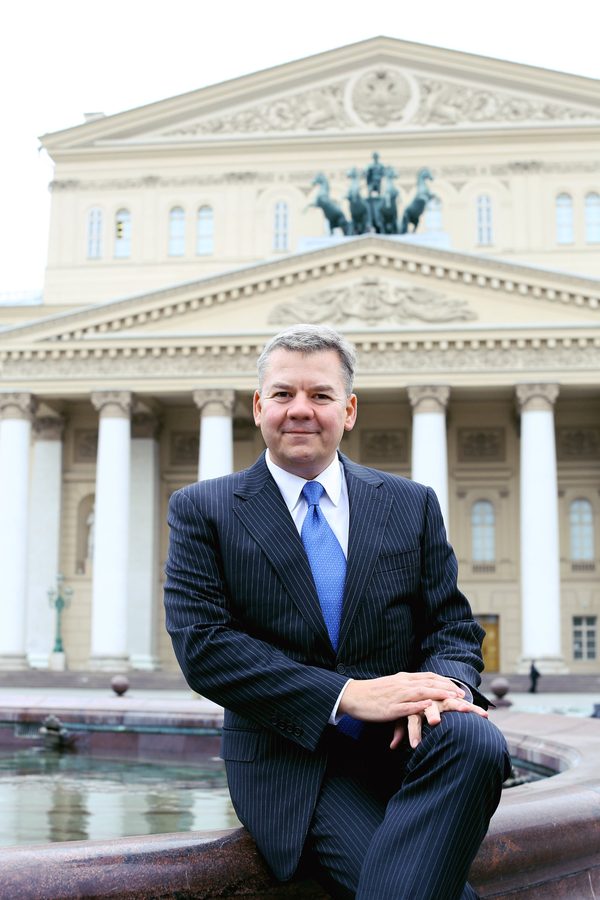
When I spoke with Stephen Ansell, he was general manager of Ararat Park Hyatt Moscow, seven years into a posting in Russia and twenty five into the industry. He has since become Managing Director, Middle East and Africa, at Hyatt. The idea he carries in The Luxury of Attention is that leadership through a crisis is done in peacetime, and that the crisis only reveals whether the work was done.
Ansell was born in London and grew up in Southeast Asia and Europe, following his father’s postings with an oil company. His first encounter with Hyatt came at six, when the family spent a month at the Grand Hyatt Singapore and he took, by family account, a great interest in helping the housekeepers. At sixteen he worked a summer in a small family hotel in the Austrian Alps, and the place he says he learned the most was a management training program with Hilton in Munich. His first leadership job, as an assistant restaurant manager at Heathrow’s Terminal 4, ended with the company in receivership, senior management gone and suppliers refusing to deliver. The supervisors kept the operation running and the staff paid.
That history is the background to the episode the new book uses in Chapter 3. Ansell was general manager of the Hyatt Regency Bishkek in Kyrgyzstan when, in 2010, a political revolution gripped the country. What strikes me about his account is how little drama he allows into it.
“I learned once again the value of a trusted, passionate local team, and how important our close relationships with the community were in seeing us through this period.” Stephen Ansell, then general manager of Ararat Park Hyatt Moscow
The understatement is the lesson. The leader who has been walking the floor, learning names and being reliably present in small moments has, by the time the revolution arrives, already done most of the work of leading through it. The crisis introduces no new behaviors. It shows which ones were there all along.
The second thing he speaks to in the book is how a new recruit is brought into the property, and it is the same idea seen from closer in. After an induction on the culture, a personal coach from their own department is assigned to each new team member for the first three months, so that nobody faces their first challenge alone. The coach is the property’s investment in the recruit’s first hundred days, the period in which a new hire either absorbs the standard or quietly gives up on it. Almost no operation budgets for this explicitly; almost every great one finds a way to deliver it.
The earlier profile shows where the coaching starts, at the hiring table.
“The key to success is hiring people who are true to your values. If we are able to identify a curious person who is inclusive, honest, empathetic, and joyful, then the technical components of the job can be learned.” Stephen Ansell, in A Wealth of Insight (2017)
Every applicant is interviewed by human resources, by senior management and then by him, and each is asked to tell stories of their successes and failures and what they learned from both.
In the book, Stephen Ansell appears in Chapter 3, Leading by Example, where the Bishkek revolution shows that the leader who has been walking the floor has done most of the work of leading through a crisis before it arrives; in Chapter 4, First the Team, where his three month coaching practice extends onboarding well past the first two days; and in Chapter 10, The Recovery, where Bishkek is the national scale version of a lesson every crisis account in the book shares: the recovery is rehearsed in peacetime, or it is not available. Stephen’s full profile, in his own words, runs ten pages in A Wealth of Insight: The World’s Best Luxury Hoteliers (2017).

The full profile, in Stephen Ansell's own words
This is the complete profile of Stephen Ansell as published in A Wealth of Insight: The World's Best Luxury Hoteliers on Leadership, Management, and the Future of 5-Star Hospitality, reproduced word for word. Titles and positions are as they stood at the time of the interview.
Growing Up
I was born in London but spent my childhood in Southeast Asia and Europe due to my father and his work with British Petroleum. My first experience with Hyatt was when I was six, when my family was accommodated at the Grand Hyatt Singapore for a month during a relocation. Apparently, I took a great interest in helping the housekeeping staff, foreshadowing my future. Living in many different countries and cultures from a very young age instilled in me a passion for traveling and adventure. I wanted to continue that lifestyle in the form of a career.
A Taste of the Industry
My first job in hospitality was when I was sixteen. I worked at a small, Austrian family hotel in the Alps. In the morning, I worked at the reception, then as a waiter at the swimming pool, and then serving lunch and dinner. I learned a great deal participating in and observing a range of operations throughout the hotel. Nothing beats firsthand experience in an environment where you’re exposed to all facets of the business.
Where I Learned the Most
After studying hospitality, I embarked on an international career by enrolling in a management training program with Hilton International in Munich, Germany. Looking back at all of my early management experiences, this is where I learned the most. The program gave me insight into all aspects of a hotel, including a six-month position in charge of stewarding. I was constantly reminded that in our business, the most important people we work with every day come from all walks of life, often with different backgrounds and life experiences. This applies to both staff and guests. On this team, we had a truly cosmopolitan group of people in which diversity and difference was embraced, respected, and valued.
Adapting to Shock
My first leadership position in the industry was as an assistant restaurant manager at Terminal 4 in London’s Heathrow Airport. While working there, the company went into receivership and senior management departed. The remaining supervisory team was asked to continue operations, ensuring staff like myself still received salaries. Suppliers were refusing to make deliveries and stock was running low. Pushing forward required smart negotiations and creative management. In the face of a seemingly intractable situation, I learned that imaginative problem-solving, determination, and sheer resolve can, in fact, save a business.
Designing a Culture of Success
As we say in the world of Hyatt, “a little understanding goes a long way.” Essentially, this translates into treating each other with respect, valuing difference of opinion, being inclusive in your decision-making, acting with compassion and empathy, walking in the shoes of others, and listening carefully.
Charging Through Headwinds
Having been in Russia for the past seven years, various geopolitical factors have made the economic environment, on occasion, somewhat challenging. It is during these times you learn the most about how to adapt your strategy to fit the moment. The faster you react, the better you will fare.
Being First Has Challenges
Prior to working in Russia, I was fortunate to open the Hyatt Regency Kyiv, the first international fivestar hotel in Ukraine. We were covering new ground and thus actively involved in all aspects of the supply chain, including extensive, and on occasion challenging, interactions with our suppliers and partners. Achieving a true sense of luxury is no easy task, particularly when the system in place to deliver on that promise does not yet exist.
A Lesson in Crisis Management
While serving as general manager of the Hyatt Regency Bishkek in Kyrgyzstan, a political revolution gripped the country. This was a very difficult time and a real-life lesson in crisis management. I learned once again the value of a trusted, passionate local team, and how important our close relationships with the community were in seeing us through this period.
Hiring for Success
The key to success is hiring people who are true to your values. If we are able to identify a curious person who is inclusive, honest, empathetic, and joyful, then the technical components of the job can be learned. Regardless of a candidate’s experience, we encourage them to share stories about their successes, failures, and what they learned in both cases. Are they able to reflect anew? Our goal is to create an environment where no one takes themselves too seriously, where we have fun at work, and where we also get to know an individual’s interests and ambitions. In order to ensure we’re all aligned, all applicants get interviewed by human resources, senior management, and then myself.
A Go-to Person
All recruits undergo a specific coaching aimed at providing a solid understanding of our culture. We answer a bevy of questions: What is our mission? How do we work together? Who are my colleagues? What do I need to do to be successful? After passing the induction, a personal coach is assigned to you in your department for the first three months. This is a critical process, as every new member of the team has a go-to person to take care of them, answer all their questions, help them face their first challenge, and ensure they make the right decisions.
Tailored Motivation
Motivation is not only about professional growth and salary. It is also about being a part of a strong, caring team, building genuine friendships with colleagues, and an atmosphere of trust. It is important to get to know each colleague individually, understanding their needs, interests, and future plans. Only then can you tailor your approach of encouragement and development to bring out the very best they have to offer.
Turnover
As general managers, we must also accept the fact that many members of our workforce may not end up in long-term careers in the luxury hospitality business. We should see this as an opportunity, as it allows us the freedom to recruit from a wide variety of people with different backgrounds, experiences, and interests. Even short-term colleagues can have a meaningful impact on our guests, provided they are motivated and committed to establishing human connections.
Work-life Balance
One of the most challenging aspects of the industry today is ensuring that hospitality remains a desirable career option for young people. We are still fighting our poor reputation in terms of compensation and unsociable working hours. A healthy work-life balance is becoming the norm, and if we are serious about attracting the best talent, it is our responsibility to create the right environment. Hyatt has done much to address this question over the years, and the industry more generally has made progress. When I joined this industry twenty-five years ago, working sixty hours a week was a prerequisite to success. Things have changed. I believe hotels that implement a reasonable work-life balance policy will increase the desirability of the profession and at the end of the day will offer a better customer experience.
A Chance to Advance
One of the most rewarding aspects of the job is providing mentorship and growth opportunities to the team. I encourage all of our associates to travel extensively in order to broaden their horizons and experience different countries. By working for a rapidly growing international hotel company, such opportunities are in abundance and perfectly compliment formal training programs.
Marketing Class
One of our most successful collaborations we embarked on was with a local university. We invited a class of marketing students to create a plan to promote the opening of a new restaurant. It was an incredibly affordable, creative, and worthwhile experience as we ended up with five very thoughtful proposals to choose from. The prize for the winning proposal was a week-long stay at one of our hotels. We ultimately chose a plan that included four teaser emails commencing one month prior to opening, with each one telling a story of the restaurant, accompanied by a voucher. Customers who kept all four vouchers were treated to a three-course menu with wine.
Authentic Engagement
The sheer volume of communication on social media is rather daunting at times. Of course, the ability to cost-effectively present our story to a targeted audience is an important opportunity. At the same time, the luxury hospitality industry is epitomized by personal connection and personalized service. I still try to answer all of our TripAdvisor reviews personally, but the challenge is to stay ahead of the game, bearing in mind the volume of feedback we receive and our goal of turning every comment or post into an authentic engagement.
The profile is one of the first person accounts collected in A Wealth of Insight: The World's Best Luxury Hoteliers (2017), the book that preceded The Luxury of Attention.