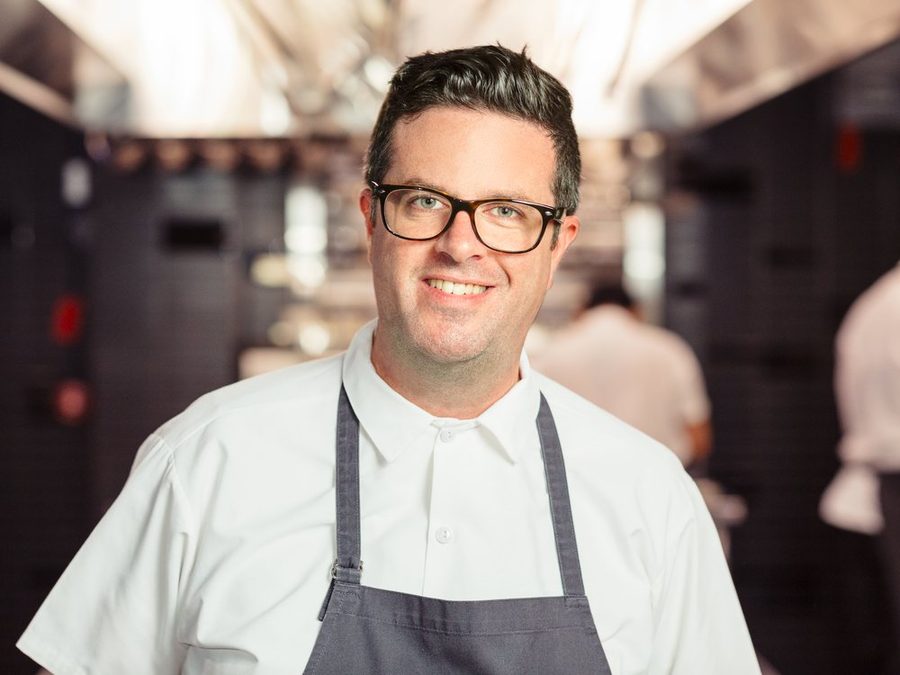
When I spoke with Sean Gray, he was chef de cuisine of Momofuku Ko in New York. Ko closed in November 2023, and Gray now cooks at the Sergeantsville Inn in New Jersey. He appears in one chapter of The Luxury of Attention, on the creative act, and he gave me the phrase I use there to correct the most common misunderstanding about creativity in kitchens and hotels: it is a muscle, and it atrophies without exercise.
Gray’s earliest memory of wanting to be a chef is a fourth grade assignment in which he was given the profession to research. A home economics teacher in middle school noticed his interest and signed him up for the Culinary Institute of America mailing list. He loved his first professional kitchen immediately, and he jokes that kitchens then were homes for lost souls. He liked the repetitiveness of the work and the problem solving that fills a young cook’s day. “There were lots of small victories and rewards along the way that made it enticing for me,” he told me. He is not, as he puts it, the product of fine dining institutions, and he tells young cooks that with the right attitude they can learn from any restaurant.
In Chapter 6, originality is treated as a rehearsal rather than a gift, built through range, failure and constraint, and Gray’s framing captures the mechanism most directly. Working alongside a group of creative people is how he keeps the muscle in use. He also pointed to something structural about Ko that made the practice easier. The restaurant had a bar adjoining the main dining room, and the pressure to produce something perfect was lower there. It gave the team a place to try ideas that were not yet ready for the tasting menu, and to make dishes people would not expect from Ko, which loosened the team’s own idea of what a Ko dish was.
“Creativity is like a muscle, it needs exercise or it atrophies, and working with a group of creative people helps me build that muscle constantly.” Sean Gray, then chef de cuisine of Momofuku Ko, New York
Two practices sit inside what he told me, and I pull both out in the book. The first is the company of other creative people, which turns creativity from a solitary act into a daily habit of the team. The second is the lower pressure venue, where an idea can fail at the cost of a bar snack rather than a tasting menu. Most kitchens have the first if they look for it. Fewer have built the second on purpose.
The profile I published in 2019 adds the habit that makes the exercise cumulative.
“Write down everything you can and develop a system to keep track of your ideas and what you’re learning. This is incredibly important.” Sean Gray, in A Wealth of Insight (2019)
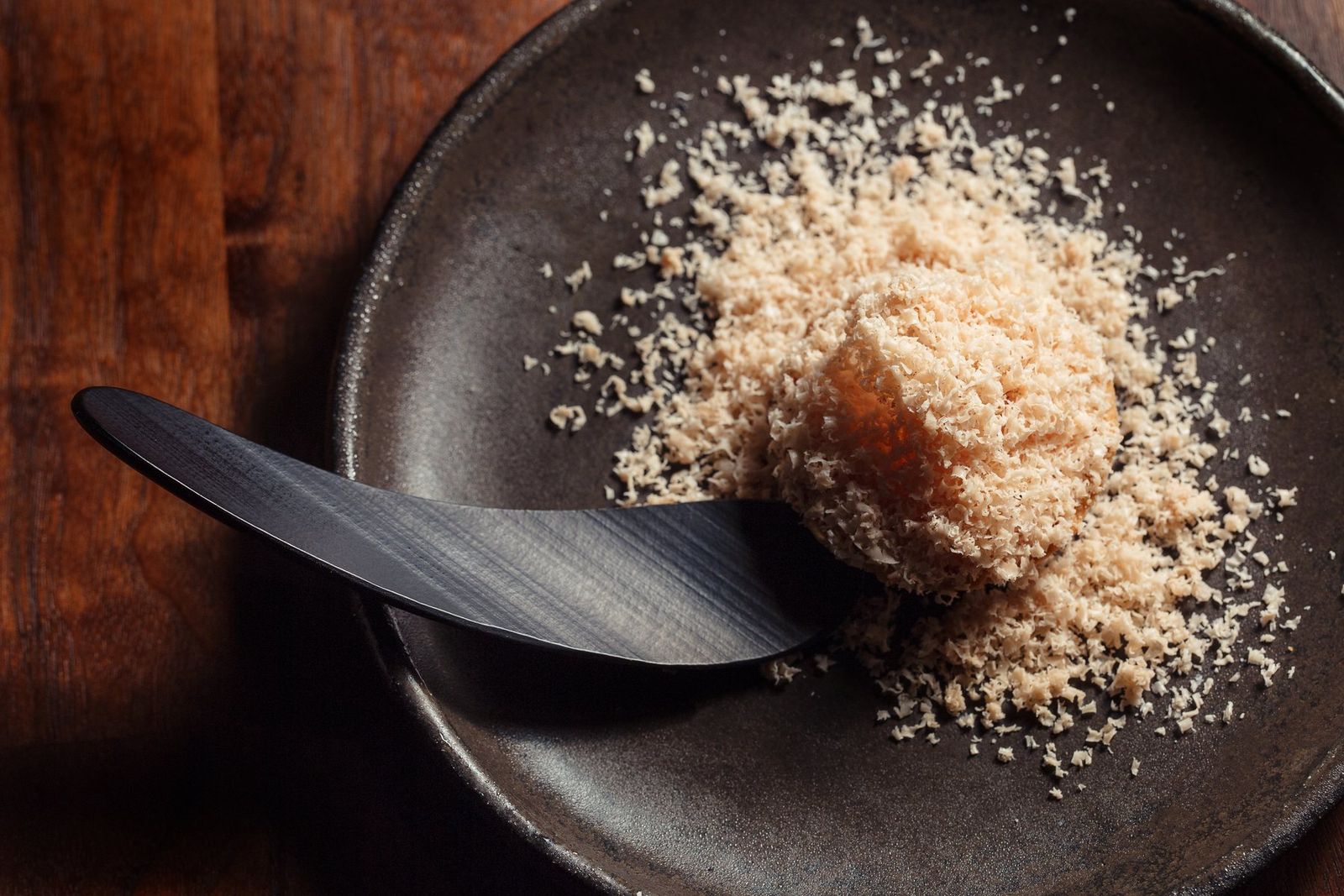
He prefers pen and paper to photographs of plates, because writing makes the connection in the brain and lets a cook see the progression of his own ideas. His wild rice ice cream dessert shows why the record matters: a long, failed effort at rice ice cream and an unrelated accident with kombu left toasting in an oven sat apart for a while before the two merged into a dish that made sense.
In the book, Sean Gray appears in Chapter 6, The Creative Act, where his muscle metaphor sets up the chapter’s three disciplines of range, failure and constraint, and where his account of Ko’s bar stands alongside Boer’s team sessions and Orlando’s rule of trying anything twice as a working example of how a kitchen rehearses originality rather than waiting for it.
Sean’s full profile, in his own words, runs six pages in A Wealth of Insight: The World’s Best Chefs (2019).
The full profile, in Sean Gray's own words
This is the complete profile of Sean Gray as published in A Wealth of Insight: The World's Best Chefs on Creativity, Leadership, and Perfection, reproduced word for word. Titles and positions are as they stood at the time of the interview.
A Budding Interest
My earliest memory of wanting to be a chef is from the fourth grade. My teacher assigned us professions and we had to interview someone who did that job. I was given a chef and my interest developed from there. In middle school, I had a great home economics teacher who could tell that I was interested in food. She encouraged me to go to culinary school and signed me up for the Culinary Institute of America mailing list. I was eager to learn more and I’m glad that I was encouraged to follow that path.
Small Victories
When I first joined a professional kitchen I loved it immediately. I joke that kitchens back then were homes for lost souls. I had an instant connection with those around me. For many of us cooking, it felt like the only job we were suited for. I liked the repetitiveness of the work. Even as a young cook, you’re solving problems all day. There were lots of small victories and rewards along the way that made it enticing for me. It’s hard when you’re starting out, but time helps with that. Working and growing helped me learn to trust my instincts.
Pursuit of Perfection
When cooking fish for a tasting menu, you have a similar menu every day with the same fish. Your portion size is almost always the same and your cooking technique is almost always the same. However, the variables that do change are how you season the fish, how hot the pan is, and when you add the butter or additional fats. If you’re paying attention to all the small details of that process, you can watch something get better or worse over time. So with each customer, you have this opportunity to perfect each step until you get to the perfect result.
Evoking an Emotion
At Ko, we’re not chained to one style of cuisine or one set of ingredients. It’s very freeing, but it’s also very challenging. With few formal constraints, we still need a starting point for creativity and for us, that’s the guest. Part of that is the function of Ko’s design: we’re cooking directly in front of our diners so we can see their reaction to our work in real time. We have to rely on intuition and emotion to understand what our guests will react to, while staying true to our core philosophy and approach.
A Fine Balance
Often times the simplest things are the most refined. This is something that I’ve learned working with David Chang. But simple doesn’t mean rustic. We apply technique to common ingredients with the aim of finding the meeting point of simple and refined. For us at Ko, it means eschewing excess ornamentation and flourishes that aren’t rooted in flavor. We are never different for the sake of being different. At the same time, we try not to reference anyone but ourselves. It’s a fine balance but if your aim is simplicity and directness, it helps you get closer to creating the right dish.
Strength in Diversity
We hire for technical ability but we’re really looking for people who are a personality fit. Ko’s strength comes from the diverse backgrounds of our staff: people who are from a more traditional fine dining rooted in French cuisine, to others who have a stronger Japanese background, to still others who have experience working in Europe. We also have colleagues who have worked in high volume Italian restaurants, and some who have never worked in a professional kitchen before. It’s a challenge to help everyone develop their technical skills, but ultimately, people from diverse backgrounds make all of us better because of what they bring.
Mind to Plate
One example of a dish that came together serendipitously is the wild rice ice cream dessert, which Zack DeZon, Andrew Bezek very much reflects our creative process at Ko. We had been working for a while on an idea of a rice, or rice milk ice cream. We wanted to end the meal with what could be interpreted as a bowl of rice. Through countless versions of recipes of rice ice cream, it never had the right consistency or feeling. After a long process, we came to the conclusion that we needed to find a way to control the variables of the gluten found in rice, which was the biggest problem in getting the right texture. We then started using a long grain wild rice, which we could cook or puff from frying in hot oil. Completely unrelated to the rice ice cream effort, we had once forgotten about some kombu, or kelp, toasting in an oven. It was something that I had brushed with oil and then wanted to lightly toast before adding to a dashi, or Japanese stock. What came out was almost caramelized and had a potato chip texture. We thought that this would be something that we could candy using a dragée method after breaking the kombu into small enough crumbs. This is a technique used to mask something bitter by coating it in something sweet. Here we thought that a kind of dessert furikake would be simple, flavorful, and have a sense of originality to it. But alas, we had no use for it, and couldn’t seem to work it into any of the other dishes. Then it hit us, merging the two concepts and components together worked really well, and it finally made sense as a dish.
Creativity is Like a Muscle
Creativity is like a muscle—it needs exercise or it atrophies—and working with a group of creative people helps me build that muscle constantly. We’re also lucky to have an adjoining bar to our main dining room. The pressure to create something perfect is less there. It’s a space for us to try out new ideas that might not be ready for our tasting menu. At the bar we can make dishes that people wouldn’t expect from us, which has allowed us to break our conception of what a “Ko dish” is and create even more freely.
Words of Wisdom
Write down everything you can and develop a system to keep track of your ideas and what you’re learning. This is incredibly important. It really helps you to see the progression of your ideas and helps you develop your own voice as a chef. Too many cooks just take photos of dishes, but I believe that actually using pen and paper makes the connection in your brain. Finally, to be a chef you just have to start cooking. Of course it’s important to set goals for yourself, but don’t get hung up on where you’re working to start. I am not the product of fine-dining institutions. With the right attitude, you can learn so much from any restaurant. It doesn’t have to be the fanciest restaurant.
The profile is one of the first person accounts collected in A Wealth of Insight: The World's Best Chefs (2019), the book that preceded The Luxury of Attention.