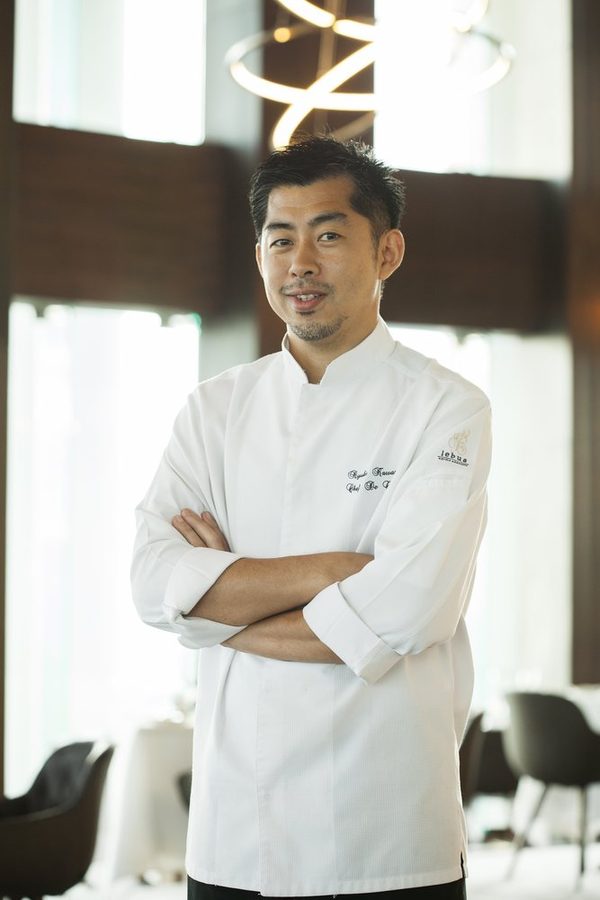
When I spoke with Ryuki Kawasaki, he was the chef of Mezzaluna at Lebua in Bangkok, where the restaurant held two Michelin stars for a cuisine he describes as French in method with a Japanese touch. He is one of the eighty hoteliers and chefs whose conversations form the basis of The Luxury of Attention. The book does not quote him under his own name in any chapter, but his account was part of the evidence I weighed when I set out what the best chefs have in common, and his earlier profile is where a reader should go to hear him directly.
Kawasaki was born in Niigata, Japan, and as a boy he helped his mother and grandmother in the kitchen. That interest took him to the Tsuji Culinary Institute in Tokyo after high school. His first professional kitchens were hard, he told me, and he was simply happy to be there, treating each difficulty as something he needed in order to grow. The turning point came later, working alongside Michelin-starred chefs in France, Japan and the United States, where he watched their dedication, their eye for detail and their pursuit of perfection and understood what the standard was.
As a junior cook he studied how his seniors managed large teams, and the conclusion he drew is the one he leads by.
“Reflecting on these issues, the most important aspects of leadership are communication with your team and listening to your diners. Everything is rooted in respect.” Ryuki Kawasaki, in A Wealth of Insight (2019)
He is candid that the hardest part of running a restaurant is the staff. The team has to be trained, has to work as a team and has to be trusted, and he says that is easier said than done when people arrive with different qualifications, backgrounds and years of experience. The other constant task is keeping the team’s skills current in a field where techniques change quickly. Those two concerns, forming the team and keeping it learning, are the same ones that run through the chapters on the team and the apprenticeship, stated by a chef who was living them in Bangkok.
On the creative side, his position is that no dish lasts forever. Seasonal availability guides everything he does, and he will not be rigid with the menu.
“Every dish has a lifecycle and we need to keep reinventing our menu before our diners get tired.” Ryuki Kawasaki, in A Wealth of Insight (2019)
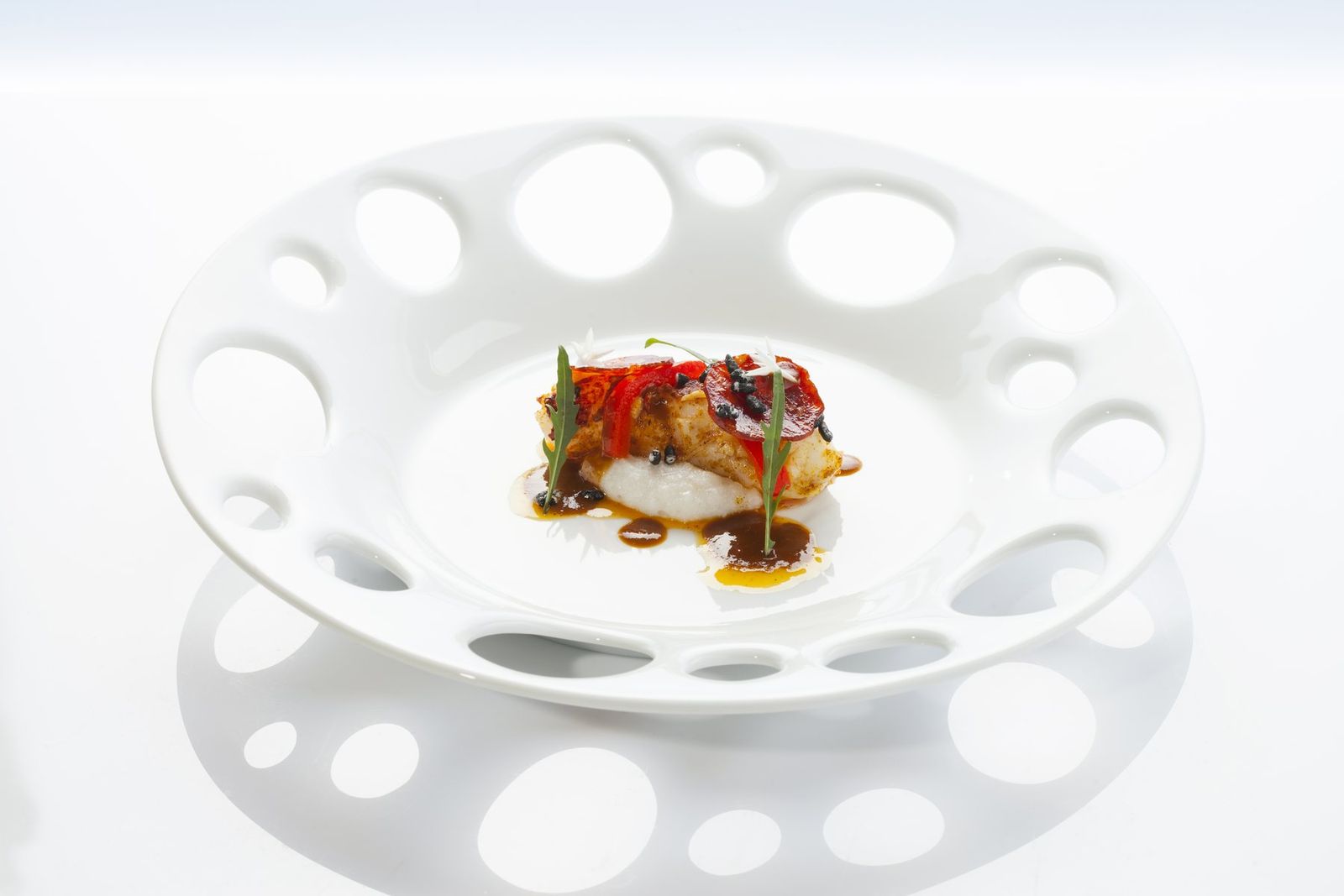
His method is orderly. He researches what is in season, decides on the products, works out how to cook and serve them and where the dish sits in the flow of the whole menu, writes the recipe down and discusses it with the team. Multiple tastings, with trial, error and improvement, settle the plate, and only then is the kitchen and the floor trained in it. The Niigata Murakami Wagyu he served at Mezzaluna, grilled over binchotan charcoal and presented in the French manner, is his own example of the twist he was after.
For a manager, the useful part of his profile is its plainness. Respect first, then communication, then a team that is trained and trusted, with the product kept moving before anyone tires of it. His advice to young chefs is of a piece: learn the basics thoroughly before wanting anything fancy, expect long hours and accept that nobody becomes an expert overnight.
In the book, Ryuki Kawasaki is listed among the eighty people interviewed for The Luxury of Attention, and his conversation sits behind the argument rather than inside any single chapter. Ryuki’s full profile, in his own words, runs 4 pages in A Wealth of Insight: The World’s Best Chefs (2019).
The full profile, in Ryuki Kawasaki's own words
This is the complete profile of Ryuki Kawasaki as published in A Wealth of Insight: The World's Best Chefs on Creativity, Leadership, and Perfection, reproduced word for word. Titles and positions are as they stood at the time of the interview.
A Natural Interest
When I was young I loved to help my mother and grandmother in the kitchen. It was this natural interest that propelled me to pursue this profession. After high school I joined the Tsuji Culinary Institute in Tokyo. My first experiences in a professional kitchen were challenging, but I was just happy to be in the kitchen. I knew that challenges were necessary to grow both personally and professionally, and I consider every challenge to be a learning opportunity.
Rooted in Respect
When I was a junior in this industry I looked to my seniors for inspiration and observed closely how they managed a big team. Reflecting on these issues, the most important aspects of leadership are communication with your team and listening to your diners. Everything is rooted in respect. I also believe that a leader must coach and motivate their team to excellence.
Molding the Team
One of the biggest challenges to leading a restaurant is managing the staff. We need to train the team, work as a team and trust the team. This is easier said than done as people come with different qualifications, backgrounds, years of experience and environments that are different than ours. Upgrading the skillset of colleagues is another key challenge as there is constant change in the world of food, and we need a team that is always aware of the latest developments, techniques and methods.
Every dish has a lifecycle and we need to continually reinvent our menu. We need to change with the times.
Bridging Past and Present
When creating a new dish, the food must be seasonal and tasty. Therefore, it is important to have a solid understanding of the marketplace and the availability of ingredients. It’s also important to understand our roots and the origin of many of our traditional ways of cooking. Today, we must also incorporate modern methods, techniques and ideas. In the end, what goes on the plate is as important as the way in which it is presented.
Learning from the Best
My experiences working with Michelin-starred chefs was my “a-ha” moment. Their dedication, hard work, eye for detail and pursuit of perfection were some of the things that I observed working in France, Japan and the United States.
My inspiration comes from using seasonal products and infusing them with both Japanese and French culture. For example, we serve the Niigata Murakami Wagyu Beef A5 at Mezzaluna. It is grilled over binchotan charcoal, and is a perfect example of what I call a Japanese touch to a French dish. While the beef and charcoal are sourced from Japan, the way in which it is cooked and presented is French, and that’s the twist.
Changing with the Times
The perfect dish may exist, but not forever, for there is a timespan for everything in life. We need to keep evolving and I am of the position that cooking changes with the times. We cannot be rigid with our menu. The availability of seasonal products guides everything we do, and that itself is what change is all about. Every dish has a lifecycle and we need to keep reinventing our menu before our diners get tired.
Mind to Plate
When creating a new dish I first research products that are in season. Once I make a decision on the products I want to work with, I think about the best ways in which we can cook them, serve them, and with which flavor combinations and profiles will they work best. The dish in question must also be integrated into the balance and flow of the overall menu, so there are lots of considerations to keep in mind. Once created, I write the recipe down and have a discussion with my team. After trial, error, and improvements over multiple tastings, including how we present the dish, we settle on what we believe is the perfect dish. When ready, we train both the kitchen and staff in our latest creation.
Make Your Mark
For new and aspiring chefs, I would advise you to thoroughly learn the basics before longing for anything fancy. You must be ready to challenge everything. Being a chef is a tough job and you should be prepared to work long hours. No one can become an expert chef overnight. It takes years of learning on the job before you can step out on your own and make your mark.
The profile is one of the first person accounts collected in A Wealth of Insight: The World's Best Chefs (2019), the book that preceded The Luxury of Attention.