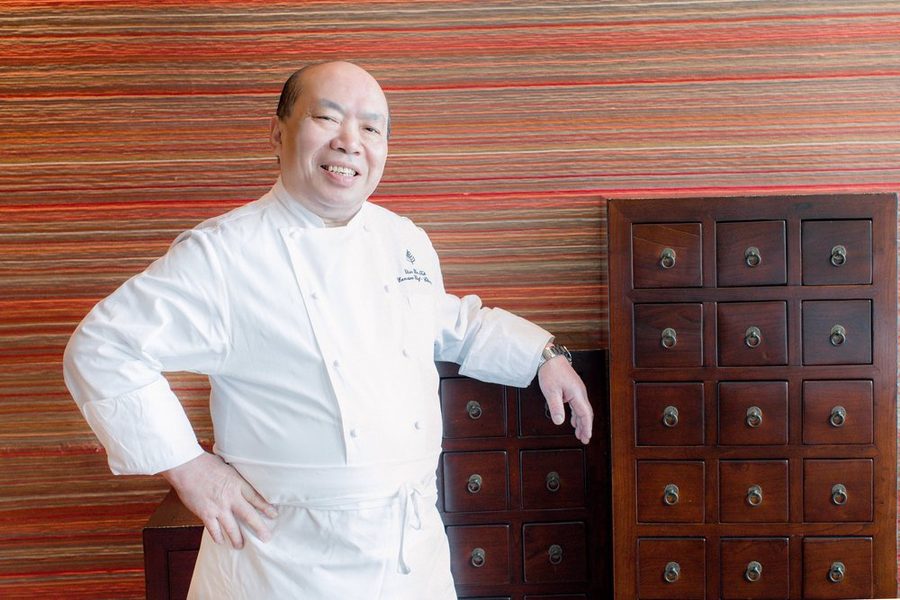
When I spoke with Chan Yan Tak, he was the chef of Lung King Heen at Four Seasons Hotel Hong Kong, where he became the first Chinese chef in the world to hold three Michelin stars. He had 54 years in kitchens behind him. In The Luxury of Attention he stands for the apprenticeship that begins for practical reasons rather than from a calling, and for what a chef who came up the hard way decides to build once the kitchen is his.
Chan did not enter the kitchen out of vocation. His father died when he was 13, and as the eldest son the job of supporting the family, financially and emotionally, fell to him. Becoming a chef was a rational choice because restaurants offered free accommodation and meals to staff. His first job was as a trainee at Dai Sam Yuen, a well known restaurant then in the Wan Chai district, where he cleaned, prepared ingredients and assisted the chefs at banquets in private homes, sometimes until two in the morning. Life as a junior chef, he told me, was all about endurance and patience. “I knew the only way to achieve big things was through hard work and dedication.”
The second thing he is known for in the book follows from the first. Chinese kitchens, in his telling, have historically carried more shouting than affirmation. Chapter 2 describes the traditional kitchen as a place built on the premise that an apprentice can only be sharpened by friction, and notes that some of the people in the book grew up inside that culture and rejected it. Chan is the one who decided early to build something different.
“Because I experienced it the hard way, I want my staff to feel respected and happy at work. We always have late night suppers together, and this culture of respect is why we have a very low turnover at our restaurant. Some of my colleagues have worked with me for 30 years.” Chan Yan Tak, chef of Lung King Heen at Four Seasons Hotel Hong Kong
Thirty years is a long time in any kitchen, and far longer than the industry average. His explanation is that staff who are treated well are not easily tempted away, because money is rarely their only priority; they prefer a healthy working environment and will stay for it.
The earlier profile shows how the respect gets converted into skill. In a traditional Chinese kitchen, he said, a young cook learns only by watching senior chefs while continuing his own assigned tasks, so how much he learns depends on how much he can absorb while doing two things at once. Chan changed the arrangement.
“At Lung King Heen, after peak lunch hours, our senior chefs stay behind and dedicate time to teaching young chefs various skills and techniques.” Chan Yan Tak, in A Wealth of Insight (2019)
The same willingness to listen runs through his cooking. His crispy scallop with fresh pear, shrimp paste and Yunnan ham started with banana as the fruit, until his team suggested pear, and it went back on the menu after he walked the dining room after lunch and his regulars asked for it. He avoids eating at other fine Chinese restaurants so that nothing good he tastes can be copied without his noticing, and the idea for his pasta fried rice came from an airline meal.
In the book, Chan Yan Tak appears in Chapter 2, The Apprenticeship, twice: first in his account of why he became a cook at all, placed among the apprenticeships that began for pragmatic reasons, and then where the chapter turns to the traditional kitchen and the people who chose to build something gentler and more durable in its place. Chan’s full profile, in his own words, runs six pages in A Wealth of Insight: The World’s Best Chefs (2019).
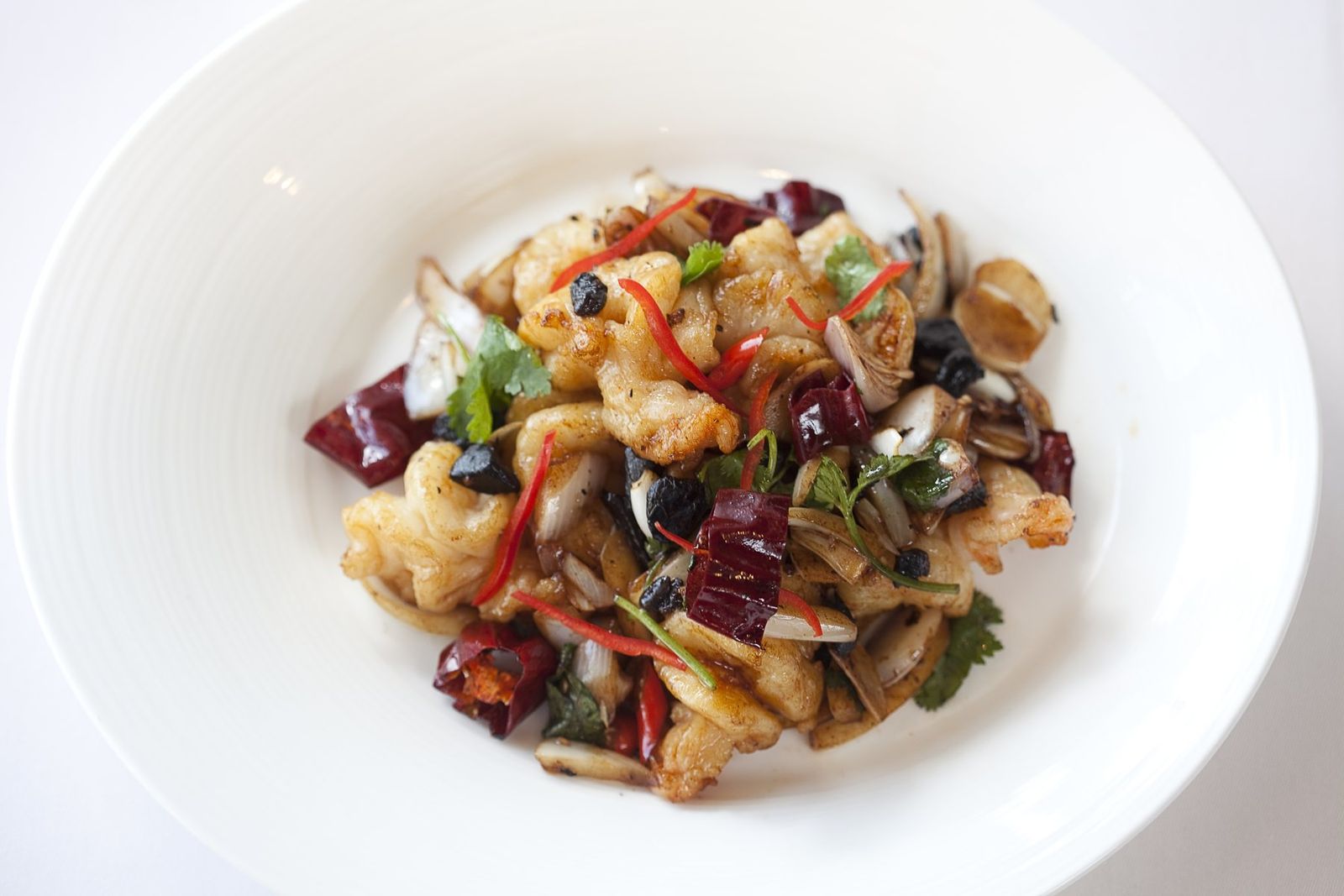
Chan: career record
Career
- Executive Sous Chef, Four Seasons Hotel Hong Kong, Hong Kong 2002 (source)
- Executive Chef, Lai Ching Heen, The Regent Hong Kong, Tsim Sha Tsui, Hong Kong 1984 to 2000 (source, 2009)
- Chef, Fook Lam Moon, Tsim Sha Tsui, Hong Kong (source)
- Apprentice, Dai Sam Yuen, Wan Chai, Hong Kong from 1964 (source)
Training
- On-the-job training at Dai Sam Yuen, Hong Kong (source)
Recognition
- Three MICHELIN stars for Lung King Heen, Four Seasons Hotel Hong Kong; he is described as the first Chinese chef to receive three Michelin stars. Michelin's own article places the first three-star award in its inaugural 2009 Hong Kong and Macau guide; the Four Seasons profile gives 2008. (2009) (source)
Checked 13 November 2026. Corrections are welcome at press@theluxuryofattention.com.
The full profile, in Chan Yan Tak's own words
This is the complete profile of Chan Yan Tak as published in A Wealth of Insight: The World's Best Chefs on Creativity, Leadership, and Perfection, reproduced word for word. Titles and positions are as they stood at the time of the interview.
The Pragmatic Choice
My father passed away when I was 13 years old. As the eldest son, it was my responsibility to support the family financially and emotionally. At the time, being a chef was a rational choice as they offered free accommodation and meals for staff. Life wasn’t exactly easy, as being a junior chef was all about endurance and patience. Back in those days, becoming a chef was more pragmatic than following a dream.
Life of a Chef
My first job was with Dai Sam Yuen, a famous restaurant that used to be in the Wan Chai District of Hong Kong. I was a trainee and my role involved cleaning, preparing ingredients, and assisting chefs during banquets in private homes. Sometimes I worked until 2AM, but that was the life of a chef. Ever since I was young, I was prepared for such a life, and I knew the only way to achieve big things was through hard work and dedication.
Share the Wisdom
One of the most important leadership lessons I’ve learned throughout my career is to help your staff grow and learn. Traditionally, in a Chinese kitchen you only learn by observing other senior chefs cook while you continue doing your assigned tasks. How much you learn depends on how much you can absorb while multi-tasking. At Lung King Heen, after peak lunch hours, our senior chefs stay behind and dedicate time to teaching young chefs various skills and techniques.
A Culture of Respect
Historically, you hear more shouting in a Chinese kitchen than words of affirmation. Because I experienced it the hard way, I want my staff to feel respected and happy at work. We always have late night suppers together, and this culture of respect is why we have a very low turnover at our restaurant. Some of my colleagues have worked with me for 30 years. If you treat your staff well, they won’t be easily tempted by outside opportunities, as money is not the only priority. They prefer a healthy working environment.
The Perfect Dish
Crispy scallops with fresh pear, shrimp paste and Yunnan ham is one of my signature dishes. It is essentially shrimp paste sandwiched between a piece of fresh pear and a piece of scallop, then deep fried. During the creation process, I used banana as the fruit, but then took the advice of my team and replaced it with a pear, giving the dish a crunchy and sweet texture. It swiftly became a classic. When Lung King Heen first opened, this dish was not on the menu, but after lunch I would go around the restaurant and collect feedback from my guests and my regulars requested that we put it back on. If the perfect dish exists, I believe it is one that receives repeated requests to be served. For the past 12 years, this dish is still loved by guests from all over the world.
Key Challenges
When running a restaurant like Lung King Heen, our biggest challenges are tied to sourcing and consistency. We fly in the freshest products from all over the world and we know what ingredients work best for each specific dish. For example, Kagoshima Chami pork for the pork dumplings and shrimp from Vietnam for the shrimp dumplings. Some of our guests ask why, after trying at home, they can’t recreate these dishes with the same recipe. I would say it has to do with the ingredients and their freshness.
Airplane Inspiration
Cantonese chefs have become very inventive since the 80s, which is when Hong Kong’s economy was on the rise. At the time, I was the Executive Chef of Lai Ching Heen, a Chinese restaurant at the Regent Hotel in Hong Kong. I was required to think of 20 new dishes every month. I just had to find inspiration from what was around me. Sometimes it was by trial and error, and other times ideas were generated by brainstorming with my team. For example, I was on a flight and thought I ordered noodles, but when I peeled open the foil, it turned out to be these long grains that were quite chewy—something I later learned was an Italian pasta called puntalette with minced beef in X.O. sauce. I tried cooking this pasta the Chinese way, and this new twist to fried rice has become very popular at Lung King Heen.
Stubbornly Original
I look for inspiration in my daily life, or when I travel, but I avoid eating at other high-end Chinese restaurants. I don’t want to be influenced by other people’s creations. I do travel to Singapore and China and eat at local establishments, but I rarely go to competitor or fine dining restaurants because if something tastes good, I don’t want to subconsciously copy their idea. I want to remain as original as possible.
Mind to Plate
One of my favorite dishes is the baked whole abalone puff with diced chicken. The inspiration behind this dish came from the traditional Chinese bridal cake, of which there is one type named abalone puff—only because the shape of the pastry resembles an abalone. I thought maybe I could make a dim sum that consists of an actual abalone. After some experimentation, the result was an outer pastry puff filled with diced chicken and mushroom, and a 15-head abalone from South Africa nestled atop the fillings. This became one of the restaurant’s most requested dim sum.
Looking Ahead
The future of food is intimately tied to good ingredients and seasonality. In the 90s, a trend was started where people looked for dramatic plating and presentation, but that’s not my style because if you spend too much time caring about the aesthetic of the plate, the food will become cold. In Cantonese cuisine, the temperature of the food is very important. It can’t be lukewarm. It must be steaming hot.
The profile is one of the first person accounts collected in A Wealth of Insight: The World's Best Chefs (2019), the book that preceded The Luxury of Attention.