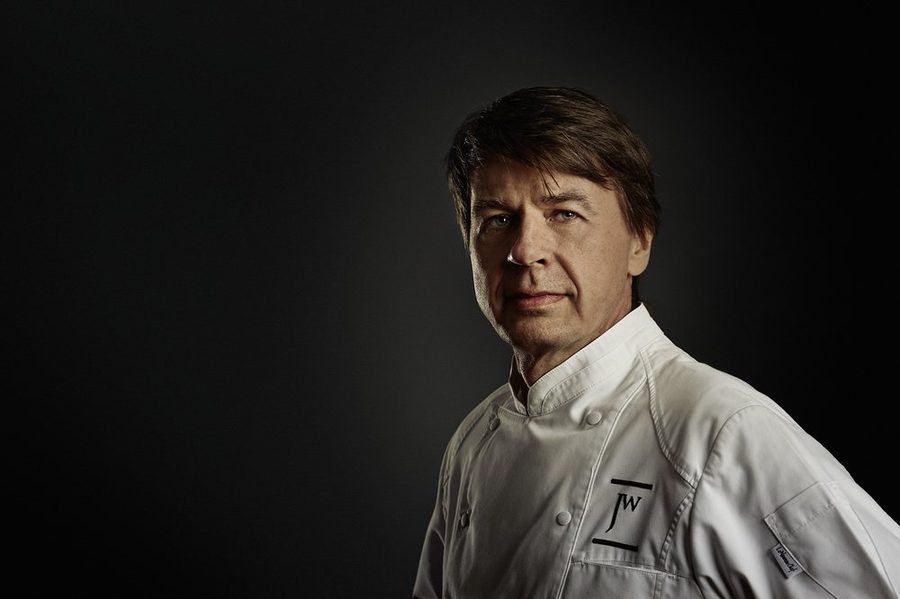
When I spoke with Joachim Wissler, he was chef of Vendôme at Schloss Bensberg in Bergisch Gladbach, Germany, a kitchen that has held three Michelin stars across decades. He has since become Grand Chef of Althoff Hotels, having handed over the Vendôme kitchen at the end of October 2025. In The Luxury of Attention he speaks to one thing: what keeps a chef learning after the field has told him there is nothing left to prove.
Wissler was twelve when he started helping with weekend kitchen service at his parents’ inn, and he says his life changed from that point. He describes the next years without a famous mentor. He moved quickly into kitchens working at the highest level, and he is grateful, looking back, that nobody stamped their style on him early. It left him room to develop his own footprint in the profession, and his own way of leading a kitchen. The farm his parents kept still feeds the work. He told me he can be inspired by the scent of one mushroom in a meadow at the edge of the forest in spring, and that the kitchen then tries to express that fragrance in a dish, working every possibility through until the result convinces or is discarded.
What he speaks to in Chapter 13 is the posture of continuous learning at the very top of the field. The most important lesson of his career, he told me, is that a chef’s own opinion of his work is subjective, and sometimes wrong, and the only answer is to keep learning and keep experimenting.
“The most important lesson I’ve learned over the years is to realize that your own opinion is a subjective assessment of your own work, which is not always correct.” Joachim Wissler, then chef of Vendôme at Schloss Bensberg
I found this striking because it addresses the problem most chefs face once they have three stars and every excuse to stop: the temptation to declare the learning finished. Wissler has not. His career has not arrived. It is still arriving, and the daily continuation of the work that brought him to where he is turns out to be the reward. There is a second consequence, and it concerns the people who pass through his kitchen. A chef who teaches cooks a disposition of constant learning, rather than a set of dishes, has given them something that outlasts the kitchen itself. The cooks who move on carry it with them, and the lineage extends beyond the chef’s own working life.
His earlier profile shows how that disposition translates into the daily running of a brigade. The biggest challenge, he says, is consistency, and he has a practical theory of where it comes from.
“From my experience, past performance of staff is a key indicator of future performance of staff, so a successful service begets another successful service. At the same time, I ensure consistency by being personally involved every day.” Joachim Wissler, in A Wealth of Insight (2019)
A manager can take two things from that. The first is that a good service is the best preparation for the next one, so the standard has to hold every day rather than most days. The second is that a chef who is still learning cannot delegate presence. Wissler was in the kitchen daily at three stars, which is the same discipline, seen from the floor, as the refusal to trust his own opinion of the food.
In the book, Joachim Wissler appears in Chapter 13, The Long Game, where his account of continuous learning names what a long career gives back to the chef who stays in the work, and where his teaching posture is the kitchen side complement to the chapter’s argument about what a leader leaves behind in the people they have trained. Joachim’s full profile, in his own words, runs 4 pages in A Wealth of Insight: The World’s Best Chefs (2019).
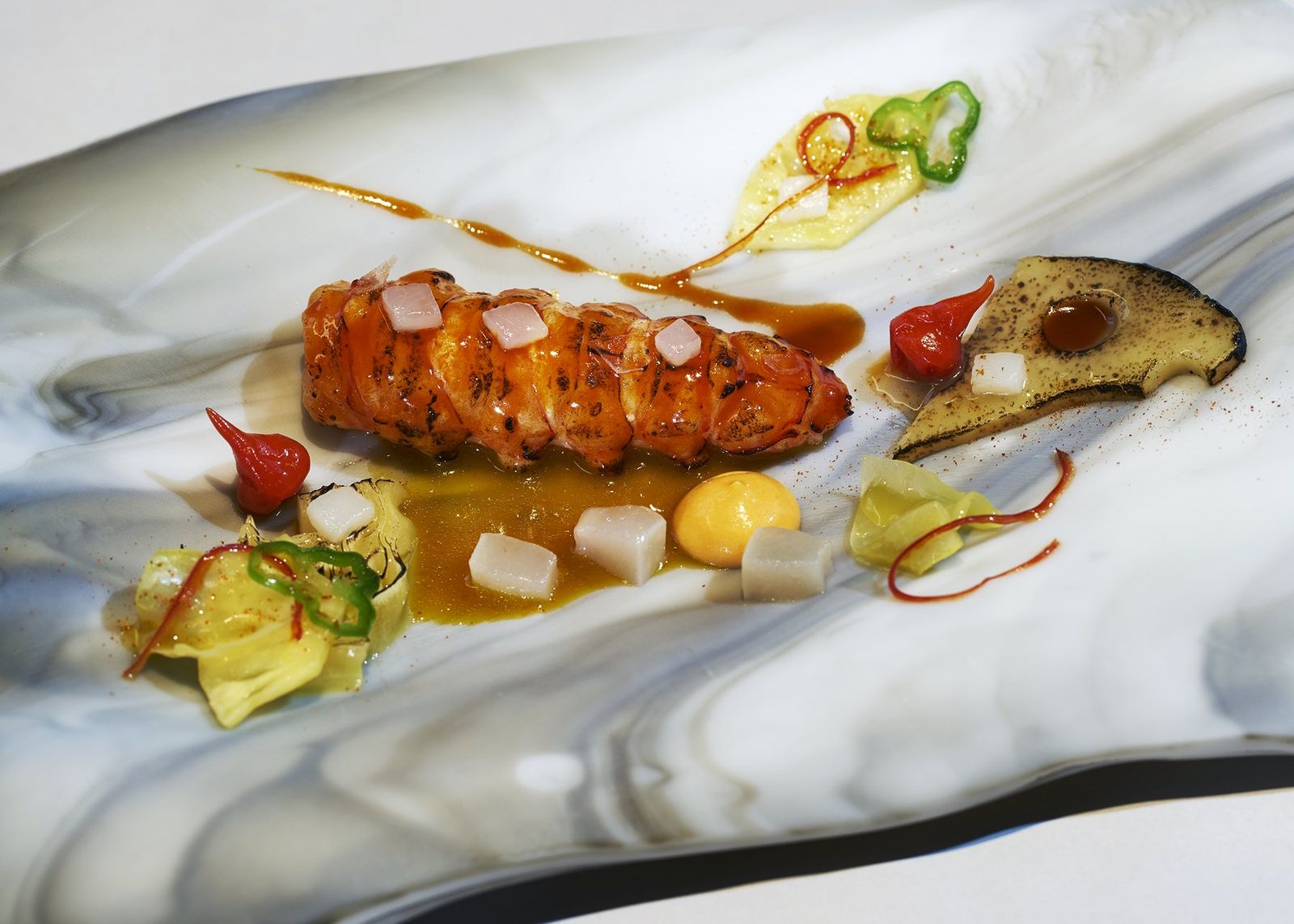
The full profile, in Joachim Wissler's own words
This is the complete profile of Joachim Wissler as published in A Wealth of Insight: The World's Best Chefs on Creativity, Leadership, and Perfection, reproduced word for word. Titles and positions are as they stood at the time of the interview.
A Calling
Working at my parents’ Spartan Inn, I became acquainted with cooking as a profession for the first time. I was 12 years old, and my life changed from that point on. I helped out with kitchen service at the Inn on weekends, and that was my contribution to the family. I realized very quickly that cooking would not only be a profession, but a calling for the future.
My Own Way
I learned that the job of a chef, as I imagined it then, had nothing to do with my educational experience or the years that followed because I quickly started working at the highest levels of cooking. Looking back, I am very grateful that I made my way as a cook back then without being dominantly imprinted by a famous mentor or another well-known personality. This allowed me to develop my own distinct footprint in the profession, and my very own style of leadership and management.
Natural Curiosity
The most important lesson I’ve learned over the years is to realize that your own opinion is a subjective assessment of your own work, which is not always correct. You must constantly learn, experiment, embrace feedback, and adjust accordingly. An eagerness to continually learn is due to my natural curiosity, which is essential to success in this industry.
Being Consistent
The biggest challenge to success is consistency. Every day the team must meet our tough standards and perform the best possible service. From my experience, past performance of staff is a key indicator of future performance of staff, so a successful service begets another successful service. At the same time, I ensure consistency by being personally involved every day.
Maintaining Balance
I can be creative in my profession as a chef, like very few people can. It’s an elementary part of my being a chef—to try new things every day without forgetting the traditions and experiences of the past. While new techniques are used to enhance flavors, rather than to create visual effects, it is not hard to keep the essence of a dish, while bringing something new and elevated to the table.
Spontaneously Inspired
I am inspired by nature, the seasons, aromas, memories from childhood and much more. For the most part, I am inspired spontaneously. It is only in a brief moment that you can get a kind of suggestion to try and experience something new. Inspiration cannot be planned—it either happens or it doesn’t.
Mind to Plate
I can be inspired from the scent of a very special mushroom in a meadow at the edge of the forest in spring on my parents’ farm. From there, we attempt to express that fragrance in a dish. All possibilities are worked through until the result is absolutely convincing, or discarded because it simply does not convince. There are many ideas for dishes that did not succeed because the result did not meet my expectations. We have a creative pool of three people who decide what goes on the menu and what doesn’t, and once a dish does make it onto the menu, we have a feedback session with the front of house since they are the one’s talking to guests.
Perfect, for a Moment
The perfect dish is always perfect until someone else makes it even better. One of my signature dishes, for example, that I believe is perfect already is the marinated goose liver with Guanaya dark chocolate, beetroot and popcorn cream. Because we put an inordinate amount of effort into making new dishes and combining ingredients, it’s very rare for us to evolve dishes.
True Food Culture
I live in a country with over 80 million people, of whom probably 0.2 percent or fewer know me. However, I am part of the most important, most beautiful and most elementary cultural heritage of our humanity: food culture. I belong to the people who do not prepare food as a means to an end, namely, to become full, but rather for enjoyment. If I wanted to present myself via a medium of our age through a particular platform, TV show or social media channel, I am not certain I would reach people who share my ideas of food culture. I don’t want to deny that chefs have evolved to have a certain pop star image over the last 20 years, but most of it is mere entertainment, governed by ratings and not by the zeitgeist of our true food culture.
The profile is one of the first person accounts collected in A Wealth of Insight: The World's Best Chefs (2019), the book that preceded The Luxury of Attention.