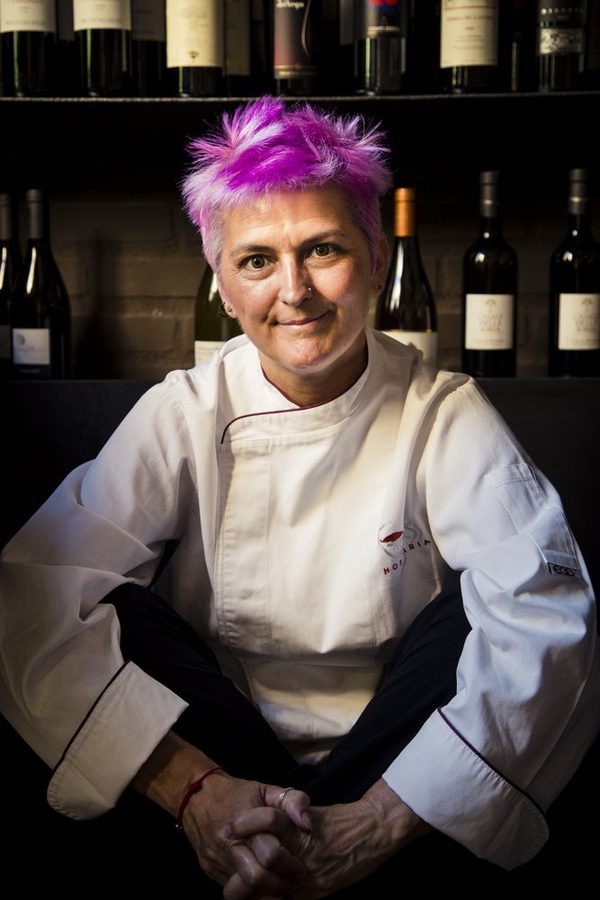
When I spoke with Cristina Bowerman, she was the chef of Glass Hostaria in Rome, Italy, where her cooking had earned a Michelin star. She appears in one chapter of The Luxury of Attention, on the long game, and the idea she carries there is that the life a person brings into the kitchen can pay for an entry price the field sets higher for some than for others.
She had cooked since she was a child and cooked for friends as a hobby, but her creativity went professionally into graphic design for ten years. At 32 she decided the same creativity could be applied in a kitchen, enrolled at culinary school in Austin, Texas, and gave herself a decade to succeed as a chef. She wanted to open a restaurant in Austin and needed an edge to convince investors, so she went to Italy to learn fresh pasta in a professional environment. After six months she was offered a job in Rome, took half of a company that ran a restaurant and a catering business, and in 2009, three years after opening Glass Hostaria, received a Michelin star. “I gave myself 10 years to succeed as a chef,” she told me.
In Chapter 13 she names a cost the chapter could not leave out. She was, and still is, a professional chef in a man’s world, and she remembers vividly how her peers treated her at the start. Some could not see her talent. Others did not realize she was willing to study and work twenty hours a day to become a good cook first and a good chef second. The book reads her account alongside the other costs a long career exacts, and notes that the field is beginning to acknowledge this one, though not at the pace the people absorbing it would prefer. The chefs and hoteliers who have endured it have treated the obstacle as one more thing to outlast.
“My degree in law, my studies of foreign languages, and my job as a graphic designer helped me speed up the learning curve.” Cristina Bowerman, chef of Glass Hostaria, Rome
That sentence carries the second half of her argument. The law degree, the languages and the decade of design were a detour only in appearance. The field made her pay twice the entry price, and the life she brought with her is part of how she could afford it.
The profile I published in 2019 shows what she does with that endurance once she is running a kitchen. She describes leading by example as the minimum, and names the harder job.
“Nowadays, the most difficult job is tied to human resources: trying to inspire people to do their absolute best is a defining feature of true leadership.” Cristina Bowerman, in A Wealth of Insight (2019)
Two of her habits travel well beyond a restaurant. As a child she promised herself to learn something new every day, and she still treats that hunger as the fuel for her creativity. And she does not believe in eternal dishes. Her grandmother’s pasta and peas will always be better than anything she makes, so she has added her own touch to those recipes and expects her own dishes to be revised as time goes by.
In the book, Cristina Bowerman appears in Chapter 13, The Long Game, in two places. The first is the chapter’s account of the costs a long career exacts, where hers is the cost specific to her path. The second is the chapter’s look at what people bring with them into the work, where her earlier life is the example of a detour that turned out to be preparation.
Cristina’s full profile, in her own words, runs four pages in A Wealth of Insight: The World’s Best Chefs (2019).
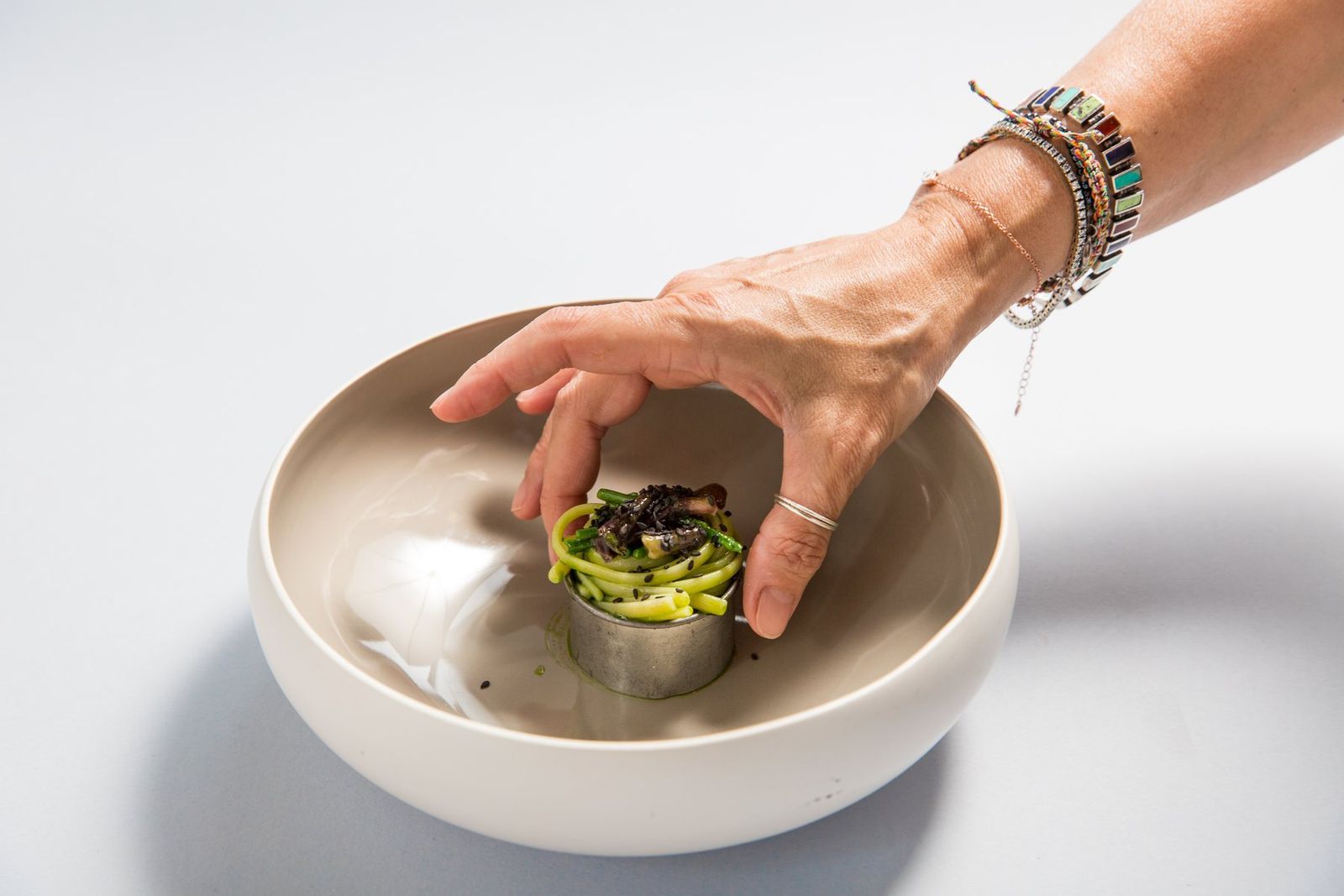
Where Cristina is now
Cristina Bowerman is Chef of Glass Hostaria, Rome, Italy. (source)
Career
- Co-Founder, Romeo Chef & Baker, Romeo Chef & Baker, Rome (source)
- Head Chef, Cuoco a Domicilio, Rome (source)
Training
- Degree in Culinary Arts, Austin, Texas (Le Cordon Bleu course referenced) (source)
- Completed a course at Le Cordon Bleu College of Culinary Arts in Texas (source)
Recognition
- MICHELIN Star for Glass Hostaria, Rome (2010) (source)
- Gambero Rosso two forks (2008) (source)
- Chef Woman of the Year, Identità Golose (2013) (source)
- Best Female Italian Chef in Europe 2018, Love Italian Life (2018) (source)
- Galvanina Award for Best Chef, Festival della Cucina Italiana (2018) (source)
- FAO Food Hero (Platinum 2024 award, shared with Glass Hostaria) (2024) (source)
Checked 13 November 2026. Corrections are welcome at press@theluxuryofattention.com.
The full profile, in Cristina Bowerman's own words
This is the complete profile of Cristina Bowerman as published in A Wealth of Insight: The World's Best Chefs on Creativity, Leadership, and Perfection, reproduced word for word. Titles and positions are as they stood at the time of the interview.
Destined for Rome
I’ve been cooking since I was a kid. It is the ultimate freedom. I would cook for friends as a hobby, too. Professionally, however, all my creativity poured out in my role as a graphic designer. I thought to myself that I could apply my creativity in the kitchen as well and decided to change careers at 32—enrolling in Cordon Bleu College in Austin, Texas. I gave myself 10 years to succeed as a chef. After graduation I wanted to open my own restaurant in Austin, but I needed an edge to convince investors, so I went to Italy to learn how to make fresh pasta in a professional environment. After six months, I was offered a job in Rome. Ultimately, I ended up taking 50 percent in a company that managed a restaurant and a catering business. Then in 2009, three years after opening Glass Hostaria in Rome, we were awarded a Michelin star.
A Man’s World
I was, and still am, a professional chef in a man’s world and I remember vividly how I was treated by my peers at the beginning of my career. Some of them could not see my talent. Others did not realize I was willing to study and work 20 hours a day to become a good cook first and a good chef second. My degree in law, my studies of foreign languages, and my job as a graphic designer helped me speed up the learning curve.
The Toughest Job
Being a leader means not only knowing how to lead by example, but also, and above all, being able to motivate every person on your team to give you the best they have to offer. Nowadays, the most difficult job is tied to human resources: trying to inspire people to do their absolute best is a defining feature of true leadership.
A Delicate Balance
I try to balance tradition with new flavors and techniques. Italy has a great heritage of ingredients and recipes, but there is so much more in the world. I love traveling and have had the chance to savor delicious food and incredible products in many different places. I learn all I can from different traditions and combine them with the best Italian cuisine has to offer.
Learning as Fuel
Inspiration comes from what we don’t know, and I’m inspired the most when I travel. I perfectly admit that there are a million things I don’t know, and that’s why as a kid I made a promise to myself to learn something new every single day. It could be a word in a foreign language, or something else entirely, but a hunger to learn is fuel for inspiration and creativity.
Mind to Plate
My process of creating a new dish is similar across the board. I focus on one ingredient and then I start to think about what it can be paired with. I try to break the rules and do something nobody has done before, because otherwise it would just be any other dish. I then put three or four ingredients that I like together that could create a flavor profile of that dish, before drawing every element on the plate and how it should be served. If I like the taste, I keep working on it, and if I don’t, I start all over again.
A Tribute to Grandma
My favorite dish, even today, is my grandmother’s pasta and peas. One of the dishes that will remain in Glass’ history is the tagliatelle with cream, ham and peas, where nothing you see is what it seems. This recipe is dedicated to my grandmother’s dish that, in any case, will always be better.
Change is Good
I do not believe in eternal dishes. There are great recipes that will remain great, for nothing will ever be better than my grandmother’s pasta and peas. That’s why I’ve taken these very recipes and added my own personal touch. I feel the same way about the dishes I’ve created. They can be modified, refined and built on as time goes on.
A Beautiful Plate
Presentation of a dish is very important to me. I worked in graphic design for ten years before pursuing my culinary dream, so the plate needs to be beautiful. The aesthetic part of the experience is not as important as the flavor so the perfect dish, for me, is a balance between the two.
More than Food
Through food you can penetrate minds. In Northern Europe, Spain and elsewhere, food has changed the economy and the way people approach life. It has given us women a way to reach equality. I think Italian cuisine in particular is becoming more structured and is ready to be propelled into the world. It is rich in flavor and history, and is a prime example of how food can become a cultural expression. Chefs like Massimo Bottura are leading the way with innovative cuisine that digs deep down memory lane. The Proustian concept of equating cooking with memory is alive and kicking. by Giovanna Di LIsciandro by Andrea Federico by Niko Boi
The profile is one of the first person accounts collected in A Wealth of Insight: The World's Best Chefs (2019), the book that preceded The Luxury of Attention.