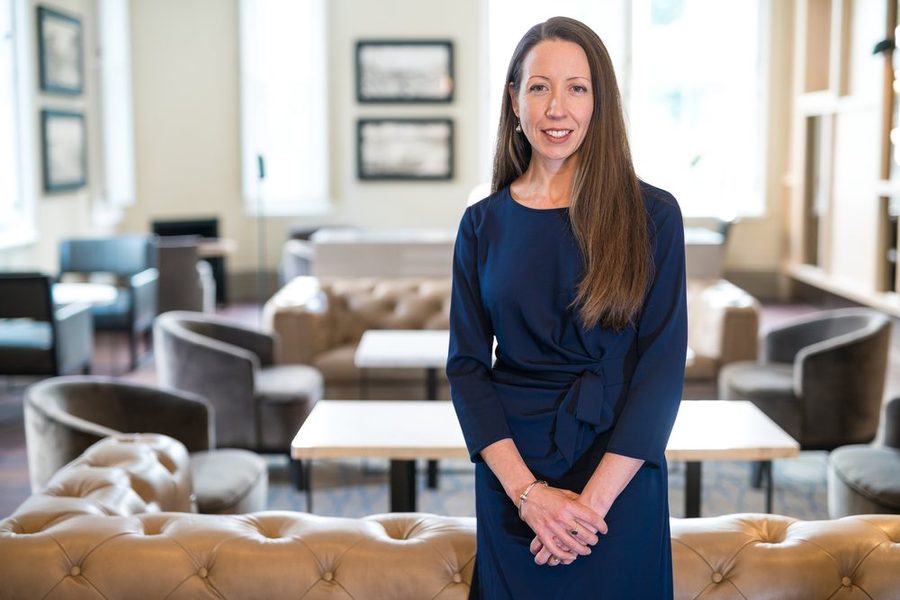
When I spoke with Anneke Brown, she was general manager of COMO The Treasury in Perth, Australia, a hotel built inside the restored State Buildings. She went on to become Managing Director of Tourism Western Australia, a post she held until July 2026. In The Luxury of Attention she carries the idea that opens the chapter on recovery: when a luxury experience goes wrong, the property corrects it in person and compensates without question, and the note of apology with a bottle of wine is the worst thing it can send.
The path
Brown’s family travelled a great deal, and she spent two years of her childhood in Jakarta, where she learned Indonesian and, at twelve, sketched a beachside resort while on holiday in Bali. Her first hospitality job came at eighteen, as a waitress, and she still holds that the best people in the business start in food and beverage, because a busy restaurant forces you to handle complaints, pressure and strangers all at once.
Her first leadership position was reservations manager for Amanresorts in Indonesia, running a team of seven Balinese and Indonesian staff. Speaking the language earned her rapport quickly, and she learned there the importance of face and the need to discipline in private. Her mentor was Guy Heywood, then general manager of Amankila. He taught her everything he knew about the luxury guest experience, supported her through the ranks and gave her her first general manager role. The main lesson, she told me, was never to cut corners on the guest experience when looking for efficiencies in the business.
What she is known for in the book
Brown keeps a short list of what a luxury property must not do when an experience breaks, and at the top of it sits the gesture most properties reach for first. The note and the bottle, in her account, rarely solve anything. They are the property talking about itself, its regret and its procedure, with the file quietly closed. What she practices instead is personal attention: a direct conversation with the guest, and enough care over the details that the solution fits the actual problem. In the book I describe this as the property turning toward the guest at the precise moment most operations turn away.
“This rarely solves anything. When a luxury experience goes wrong, you need to correct it, and compensate without question.” Anneke Brown, then general manager of COMO The Treasury
In her own words
The earlier profile shows the same instinct applied to the team. She hires for personality, she wants colleagues to arrive with a suggested solution alongside the problem, and she steps in when the floor is overwhelmed.
“The most important thing is that the guests are looked after. If that means clearing a table of empty plates because the waiters are all tied up, or lifting a piece of luggage because the porter is looking after someone else, then this is what leaders must do. You must never stand back and let your team falter.” Anneke Brown, in A Wealth of Insight (2017)
What to take from her
Correct the experience, do not describe your regret. Speak to the guest yourself, get the details right, and fix what went wrong before anyone reaches for the wine list.
Ask for the solution with the problem. When a colleague brings her a challenge, she asks what they would do and which option they think is best, then provides guidance. The team learns to think, and she stays close enough to catch mistakes.
Delegate in steps. Identify the people ready for more, train them, trust them to deliver, watch, and give feedback. She treats this as the practical engine of succession planning.
Build on the local story. Her example is a former treasury clerk who toured the building before it opened, told her he had met his wife there, and was later hosted in a suite with his wedding songs playing as the couple walked in. The gesture cost little and came entirely from listening.
In the book
Anneke Brown appears in Chapter 2, The Apprenticeship, where her account of Guy Heywood stands alongside the other mentor stories from my interviews, and in Chapter 10, The Recovery, where her correction without question opens the chapter and sets its posture. The chapter returns to her at its close, placing her alongside Axel Bethke, Mariano Silvestri and Gerrit Graef as four stations of one discipline. Anneke’s full profile, in her own words, runs 10 pages in A Wealth of Insight: The World’s Best Luxury Hoteliers (2017).
Where Anneke is now
Anneke Brown is Managing Director, Tourism WA (Department of Creative Industries, Tourism and Sport). (source, 25 November 2024)
Career
- General Manager, COMO The Treasury, Perth 2014 to 2020 (source, 8 March 2023)
- Resort Manager, Longitude 131, Uluru (source, 8 March 2023)
- Founder and Managing Director, Anneke Brown Consulting, Anneke Brown Consulting, Western Australia formed 2020 (source)
- Global Director of Training, Aman Resorts (source)
- General Manager, Western Australia, Australian Registered Training Organisation, Perth 2010 to 2014 (source, 8 March 2023)
Training
- Bachelor of Commerce, University of Western Australia (source)
Recognition
- Featured in the Power 500 catalogue of Western Australia's most influential business leaders, Hospitality, tourism and sport section (2025) (source)
Checked 13 November 2026. Corrections are welcome at press@theluxuryofattention.com.
The full profile, in Anneke Brown's own words
This is the complete profile of Anneke Brown as published in A Wealth of Insight: The World's Best Luxury Hoteliers on Leadership, Management, and the Future of 5-Star Hospitality, reproduced word for word. Titles and positions are as they stood at the time of the interview.
Growing Up
As a family, we traveled frequently. When I was a young child, we lived in Jakarta for two years. I learned to speak Indonesian, fell in love with the people and the country, and developed a passion for the hotel industry when I was just twelve years old. While on holiday with family in Bali, I sketched out a beachside resort. My father was my greatest guide. He always encouraged me to be confident and to pursue academia, guiding me to university and ensuring I received a solid business education.
The Job of a Waitress
At age eighteen, my first position in hospitality was as a waitress. I still today believe the best hospitality people start in food and beverage. You are forced to handle stressful situations that need immediate responses. For example, you need to deal with time pressures of a busy restaurant, prioritizing many tasks, handling complaints from guests, handling demands from the kitchen, dealing with money, working long hours, being on your feet all day, learning how to communicate effectively and efficiently, learning to empathize with strangers, and much more. The food service industry is truly a gateway to a successful career in hospitality.
Problem Meets Solution
One of the hallmarks of my management style is encouraging colleagues to come to me with not only a problem but also a suggested solution. When presented with a challenge, I ask them what they would do and what they think is the best option. I want them to think for themselves, yet always be there to provide guidance.
Cultural Nuances Matter
My first leadership position was serving as the reservation manager for Amanresorts, Indonesia. This was a dream role, and I was responsible for seven staffers. I was based at Amanusa in Bali, and all my staff were Balinese and Indonesian. Because I spoke Indonesian, I was able to quickly build rapport with my team and earn their respect. However, I was young and had yet to earn their trust. I quickly learned the cultural specifics of both Balinese and Indonesian staff. It was in this role that I learned the importance of “face” in Asian cultures, and the need to discipline in private.
An Engaged Team
All staff must understand the importance of engaging in the guest experience to ensure that each and every guest is treated to a truly memorable stay. Engagement requires care and concern. An engaged staff can also identify when a guest experience can be improved, and can take action themselves to resolve any issues with a service or offering.
The Secret to Delegation
Developing your staff to take on roles of increasing responsibility comes down to delegation. You need to identify those who are ready to take on additional tasks, select them, train them, trust them to deliver, observe their efforts, and ultimately provide feedback. Delegation empowers and opens the door for stars to shine. It is also a smart strategy for any succession planning to be effective.
The Perfect Cultural Fit
You must respect, integrate, and embrace the managing team around you. As they ultimately run dayto-day operations, include their voice and ideas in all key decisions. When selecting senior managers, it is critical that they be the right cultural fit, which is the most important aspect of any business. When the management team is a perfect cultural fit, each person understands and embodies the essence of the vision and values. They work together, support each other, and contribute their insight and experience to important decisions.
Mentor Matters
I had one primary mentor who played a significant role in my career. His name was Guy Heywood, and at the time he was the general manager of Amankila in Indonesia. He taught me everything he knew about the luxury guest experience, supported my growth through the ranks, and even gave me my first general manager role. He saw the talent within me early on and nurtured it over many years, introducing me to key management personnel for Aman Resorts. I thrived on the trust he placed in me, and I learned everything I could from him. The main lesson he taught me about the luxury market was never to cut corners on the guest experience when looking for efficiencies in the business. Cost saving strategies should never be at the detriment to the guest experience.
Hire for Three Traits
I hire for personality, personality, and personality. I look for gracious people who are confident and passionate. I try to avoid arrogance or ego, as this will work against you in the hospitality business.
Roll Up Your Sleeves
As a leader, you need to be aware of when your staff goes through tough times. When it’s so busy and the team is exhausted at the end of their shift, they know that I will step in and support them, no matter what the task. The most important thing is that the guests are looked after. If that means clearing a table of empty plates because the waiters are all tied up, or lifting a piece of luggage because the porter is looking after someone else, then this is what leaders must do. You must never stand back and let your team falter. Your staff will never forget that assistance, and the loyalty they’ll show simply because they witness you practicing what you preach will be invaluable.
Small but Mighty
One of the biggest challenges to leading a luxury hotel in a country like Australia is the associated costs of delivering a high-quality service where the labor cost is extreme. This results in delivering a luxury experience with a very small team, which can only be effective if you double-down on recruiting multiskilled people, and regularly invest in their professional development.
A Bottle of Wine Can’t Fix
When the experience is not up to par, the best action is personal attention and speaking directly to the guest, ensuring you understand all of the details so that your solution is relevant. The worst possible option in a complaint situation is to send a note of apology and a bottle of wine. This rarely solves anything. When a luxury experience goes wrong, you need to correct it, and compensate without question.
Do Your Homework
If you’re interested in joining the hospitality industry, work while studying. Put yourself in the industry while you’re learning it. This will be challenging on your time, and will teach you how to manage it more effectively. Then when you apply for the role you want, show your passion, do your homework and learn as much about the company as you can in advance, including experiencing their product. Eat at their restaurant, book a room, and make sure the company and its values speak to you. If you’re just looking to get your feet wet, offer to work a few shifts on a trial basis.
Authenticity in Action
Everything we create is based on the local experience, and that’s what makes us unique. Our food, wine, amenities, and minibar are filled with local products. We work with local businesses, sharing the story of our city, the history of the area, and curating itineraries that celebrate our surrounding. Most luxury travelers living in highly-commercialized worlds are thirsty for unique, authentic, local experiences. Embodying the local culture is critical to our success.
Celebrating Local
One of our most successful marketing campaigns to date was titled State Makers. It was a campaign that celebrated the very best of local experiences by connecting, in our buildings, guests with artisans and craftsman around us.
Storytelling, not Just Product
True luxury hotels are about experiences. In heritage hotels, like ours, there are wonderful and very unique stories from within the buildings. For example, one of our suites is called the Cabinet Room, and it was in this room that the State Cabinet sat, discussing and determining the direction of the State. If only those walls could talk.
Once Upon a Time . . .
During the final months of the restoration of the State Buildings and COMO The Treasury, we were contacted by a gentleman who once worked in the treasury department in the 1960s. In fact, he met his wife working in these buildings. I took him on a site tour wearing a hard hat and boots, and we walked the corridors. He shared with me wonderful stories of his working days, and that he was planning to book a room to celebrate his 43rd wedding anniversary as a surprise for his wife.
We invited them to stay as our guests—a small gesture to thank him for the incredible history he had shared with us. We allocated one of our suites. The room housed the chief accountant’s office, the same room that he would deliver documents to daily during his years as a clerk. During our tour, he said that every anniversary he would play a couple of songs from their wedding. We loaded those songs onto an iPod in the room and had them playing as they entered. His wife was in tears. Later during their stay, she had been to the gift shop and had shown interest in the locally made porcelain tea set. The shop owner contacted me and we wrapped the tea set, gifting it to the guests at turndown for their anniversary.
The profile is one of the first person accounts collected in A Wealth of Insight: The World's Best Luxury Hoteliers (2017), the book that preceded The Luxury of Attention.